Mira Mesa was built out mainly in the 1970s and 80s. Inland heat on Camino Ruiz, Gold Coast Drive, Westview, Hawthorn Hills, and Park Village ages underlayment and boots faster than a coastal marine-layer street. If the roof is leaking, start with cause, not a dollar guess. Top Pro Roofing SD is a referral service. We do not price patches or send a crew. Call (760) 750-5557 for a match with a licensed independent roofer.
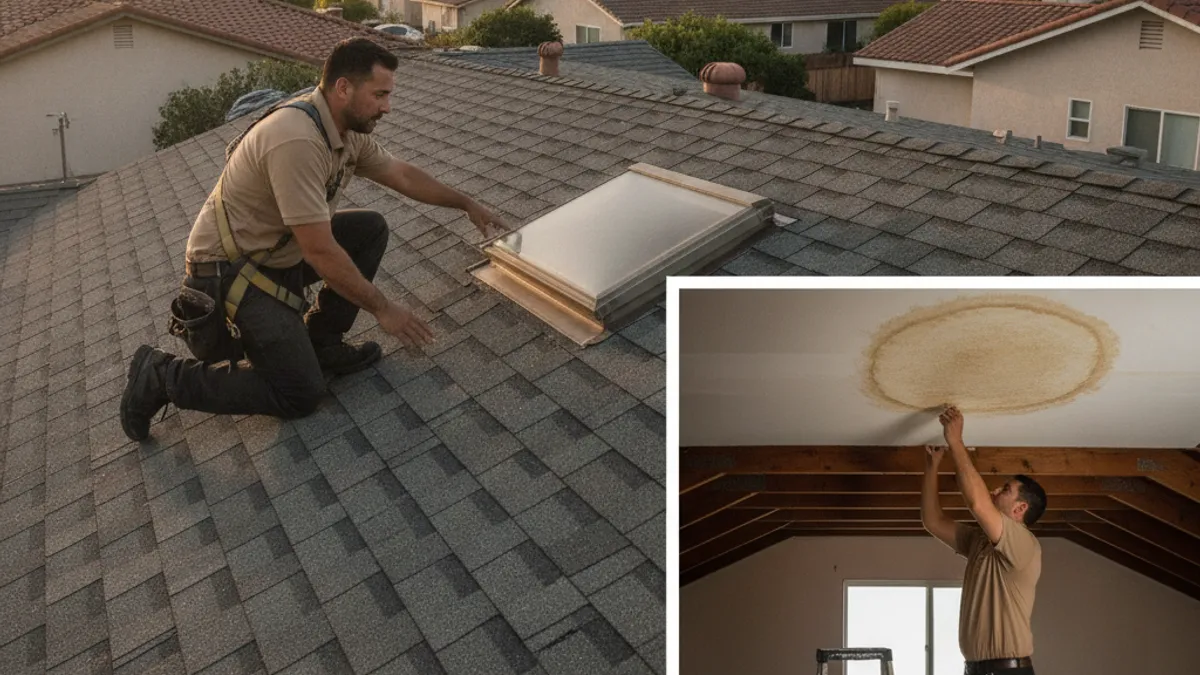
The most common causes of leaks here
Tile underlayment on original tract roofs. Concrete and Spanish S-tile are common on Mira Mesa single-family. The tile can still look sound while the felt or later sheet under it is brittle. Water reaches the deck through a slipped tile or a failed lap. Signs: tile roof underlayment failure. County-wide leak paths: what causes roof leaks in San Diego.
Low-slope membranes on condos and townhomes. Dense inventory along Mira Mesa Boulevard and feeder streets often uses TPO, modified bitumen, or other low-slope systems. Ponding at drains and failed seams show up as interior stains in the unit below, not as a missing shingle. Flat roof ponding water covers what to look for from the ground.
Failed pipe boots and vent flashing. Rubber collars age out sooner than tile or shingle. Inland UV cooks them. A small split at a plumbing vent can track along framing and stain a ceiling rooms away.
Shingle pockets and stacked layers. Some streets still carry composition shingle, including overlays that were never a full tear-off. A second layer can hide wet deck. Ask the matched roofer to count layers at an eave, not from the sidewalk.
Later solar and skylight flashings. Retrofits that were not integrated with the field fail at mounts and curbs. The panel or the glass is rarely the path.
What to do first
Contain water with a bucket. If a ceiling bulge is heavy, a small puncture at the lowest point can relieve pressure before a larger section drops. Move furniture and electronics. If water is near an outlet or fixture, shut that circuit at the breaker. Do not walk wet tile. Untrained foot traffic cracks more tile than it finds.
If the unit is a condo or townhome, tell the association as well as calling a C-39. Common-area membranes are often HOA work, not a unit-owner patch.
What a repair quote should name (no invented prices)
We will not publish patch, boot, membrane, or lift-and-relay dollar ranges. Those numbers are not measured on your house.
Ask the written quote to separate:
- Isolated tile reset versus underlayment work once the area is open
- Pipe boot or vent flashing, including how much surrounding roofing is disturbed
- Low-slope seam, drain, or coating work versus a full membrane replacement
- Overlay tear-off if a second shingle layer is present
- Hidden deck or dry-rot extras, with a stop-and-approve step
Replacement planning if the field is finished: is a 20-year-old roof too old. Cost questions belong on a measured bid, not this page. Context: roof replacement cost in Mira Mesa and roofing in Mira Mesa.
Mira Mesa is inside the City of San Diego. City of San Diego Development Services publishes Information Bulletin 123 for covering renewal inside that city. Read the current live bulletin. This page will not restate exemption classes or layer limits. Ask who pulls the permit for this address.
When a leak here is an emergency
Treat it as urgent if water is pouring, staining is spreading fast, or water is near wiring. During a storm, containment and a secured tarp matter more than waiting for a convenient appointment. Emergency roof repair is the service page. This brand does not promise arrival times.
Preventing the next leak on an aging Mira Mesa roof
Inland UV and attic heat matter more here than salt air. A fall check of boots, tile laps, and any low-slope drains is more useful than a sidewalk glance. After a heavy rain, look at ponding on garage or addition sections before the next system arrives.
If the matched roofer flags widespread granule loss, curling shingle, or brittle underlayment across the field, treat that as a planning signal. It is not a license to invent a reroof price on this page. Seasonal checklist: annual roof maintenance.
FAQ
My roof looks fine from the ground. Why is it leaking?
Tile and membranes hide the sheet that actually sheds water. A cracked boot or a slipped tile is easy to miss from Mira Mesa Boulevard. An inspection from the attic and the roof, not the curb, is the answer.
Is patching worth it on a roof this old, or should I replace it?
One isolated leak on a field that tests sound can be a repair. Granule loss, brittle underlayment, or ponding across a low-slope section found on the same visit is a different job. Get that dividing line in writing.
How do I know if I have two layers of shingle?
Ask the roofer to check at the eave. A doubled edge often means an overlay. Tile lift-and-relay is a different question: the tile stays, the sheet does not.
Does a cracked pipe boot really cause a whole ceiling stain?
Yes. Water can travel along rafters or sheathing before it drops. Treat the stain as a symptom.
My Mira Mesa condo is leaking. Who pays?
Ask the association documents. Many Mira Mesa Boulevard corridor roofs are common-area membranes. Do not assume a unit-owner patch is legal or covered.
When to call us
If a Mira Mesa roof is leaking, or you see granules in the gutters and do not know if it is urgent, get a licensed independent C-39 on the lot before the next rain. Call (760) 750-5557 and we will connect you with a licensed independent local roofer.