San Diego roofs fail from UV, marine-layer moisture, Santa Ana wind, and a short winter rain season, not from snow load. A seasonal checklist from the ground catches debris, clogged valleys, and obvious flashing problems. Work on the roof itself belongs to a licensed C-39. Top Pro Roofing SD is a referral marketplace. We do not inspect, clean, or repair roofs. Call (760) 750-5557.
Coastal material context: best roof material for coastal climates. Tile-specific care: how to maintain a tile roof in San Diego.
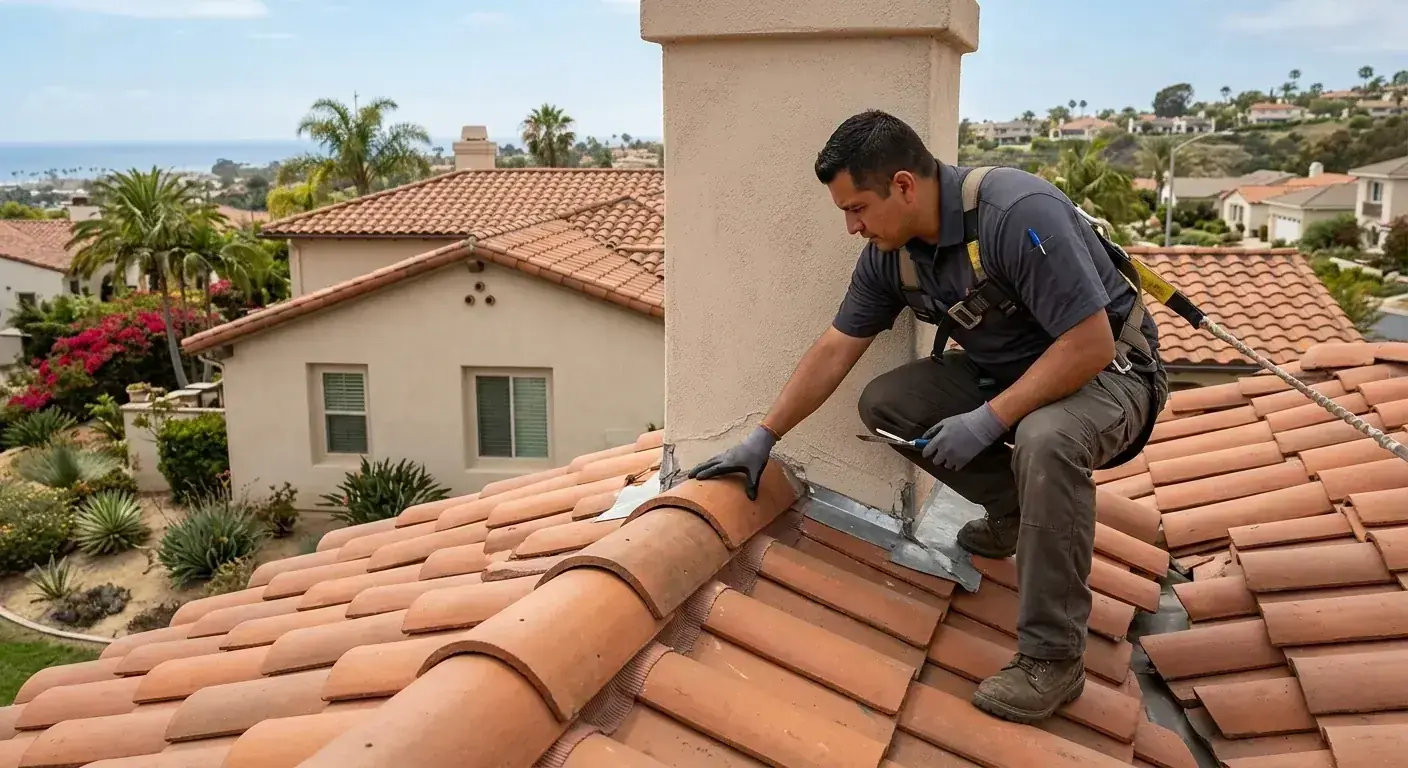
Why San Diego roofs need maintenance without a hard winter
UV bakes asphalt, dries mastics, and can stress tile. The marine layer (May Gray and June Gloom) keeps surfaces damp for hours. That moisture feeds algae on shingle and holds debris against underlayment at laps. Santa Ana events lift shingle tabs, shift tile, and drop branches. Rain typically concentrates from November through March. Confirm current climate normals on NOAA’s published tables if you need a number. Coastal, inland, and mountain totals differ. An airport figure does not describe your lot.
A clogged gutter or a cracked tile does not wait for a blizzard. Ground checks plus a paid inspection when something looks wrong beat an emergency leak call.
Spring: after winter rain, before May Gray lingers
From the ground or a stable ladder at the eaves, not a walk on tile:
- Clear valleys, chimney cricket, and skylight wells of leaves and twigs. Do not pressure-wash shingle or blast under tile.
- Look at flashing for lift, open joints, or rust at chimneys, vents, and walls.
- Confirm gutters discharge away from the foundation and are not packed with granules.
- After a stretch of marine layer, note interior stains that only show when the air is wet.
If flashing is open or you cannot see the field safely, stop. Schedule a roof inspection with a C-39 before summer heat.

Summer: UV, granules, and attic airflow
Use binoculars. Look for faded or curled shingle, bare granule spots, and cracked or displaced tile. Do not walk a hot tile roof to “just check.”
Attic airflow is the other summer job. Blocked soffit or ridge vents cook the deck from below. If you can enter the attic safely, look for damp sheathing, daylight at penetrations, and insulation stuffed into vent paths. We will not invent energy-bill savings. A C-39 can say whether the venting matches this roof.
Fall: rain season prep
Before the first real storm:
- Clean gutters and downspouts. Dry-season dust plus late-summer leaves is enough to overflow at the eaves.
- Check valleys again. Standing debris on a tile or shingle valley is how water backs under laps.
- Note missing tabs or tiles after late wind.
Gutter replacement is a separate trade conversation: gutter installation. We do not quote cleaning or guard prices.
After a storm: stay on the ground
Never climb a wet roof. Walk the yard and use binoculars:
- Missing shingle or tile, or pieces on the lawn
- Bent or open flashing
- New gutter overflow marks
- Branches sitting on the field
- New ceiling or wall stains inside
If an electrical fixture is wet, shut that circuit at the breaker. Photograph stains and the roof from the ground. If a claim is in play, read the current live California Department of Insurance consumer guidance and your policy. This page will not restate notice windows or photo duties. Coverage still depends on the policy.
When to stop DIY and call a roofer
Stay off the field if you are not trained for that covering. Tile cracks under the wrong foot. Call a C-39 when you see widespread missing covering, open flashing, an active interior leak, or algae that returns after you already cleaned from the ground.
Top Pro Roofing SD does not perform the work or warrant it. We match you with a licensed, independent local roofer. You contract and pay that professional directly. Verify the license at CSLB. Call (760) 750-5557.