Oceanside roof replacement cost is a quote, not a catalog number. Material, roof size, layers, access, and how close you sit to the beach all move the total. Homes west of Interstate 5 usually need a different fastener and flashing spec than houses east of College Boulevard. Top Pro Roofing SD is a referral service. We connect you with a licensed local roofer who prices your roof, not a published county average.
The full breakdown on the best roof material for coastal climates goes deeper on salt and underlayment.
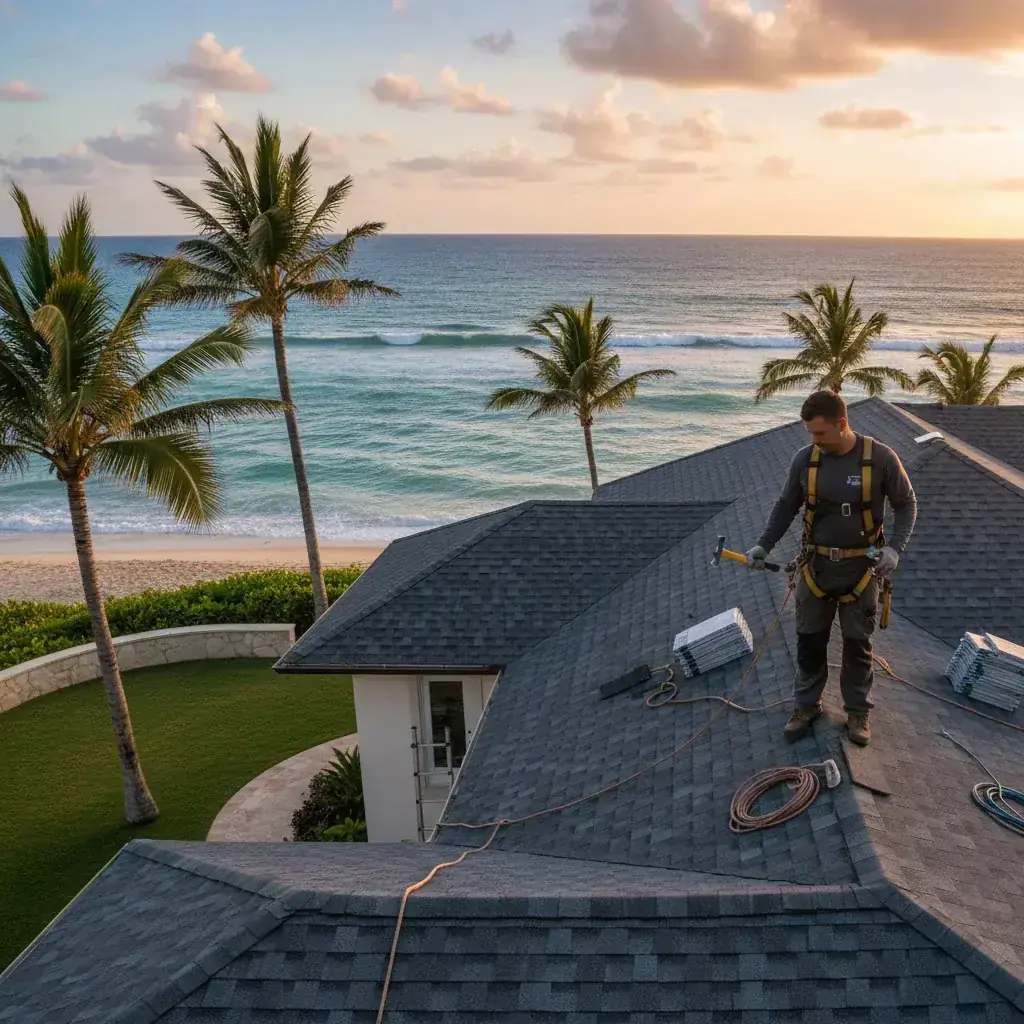
How to read an Oceanside reroof quote
Search results for “re roofing cost in oceanside” want a single range. A single range hides the job. Ask every C-39 for a written line-item proposal that names:
- Tear-off versus overlay, and existing layer count
- Underlayment product, especially on eaves and valleys
- Fastener metal: stainless, hot-dip galvanized, or something else
- Field material and color, including HOA restrictions if you have them
- Flashing, boots, drip edge, and ventilation
- Permit pulled under the contractor’s license
- Deck repair process if sheathing is wet or failed
- Cleanup, disposal, and what is excluded
Two quotes are not comparable if one includes stainless fasteners and high-temp synthetic underlayment and the other assumes standard galvanized nails and felt. The cheaper number is often a thinner spec. For contractor vetting, use how to find a roofing contractor in Oceanside.
How beachside vs. east-of-the-5 pricing differs
In Oceanside, your home’s location relative to Interstate 5 is a major factor in scope, even before anyone talks dollars.
West of I-5: the coastal zone
Homes in South Oceanside, the Harbor, and along Pacific Street sit in salt spray and dense marine air. That environment attacks standard metal.
- Fasteners. Electro-galvanized nails can corrode far sooner near the water than they do inland. Stainless or heavy hot-dip galvanized fasteners are a common coastal spec. Confirm the metal in writing.
- Underlayment. Synthetic underlayment plus self-adhering protection at eaves and valleys is how many C-39s back up wind-driven rain. Felt that soaks and tears is a weaker backup in this climate.
- Field material. Lower-grade coatings and bare ferrous metals age faster in salt. Roofers in our network see coastal roof salt damage show up first at flashings and fastener heads.
Expect a coastal job to carry more material cost than the same footprint inland because of those upgrades, not because the ZIP itself is magic.
East of I-5: inland climate
East of the 5, in Guajome, Arrowood, or Ocean Hills, direct salt spray drops. Heat and UV take over. Standard galvanized fasteners may be acceptable on some assemblies. High-quality synthetic underlayment is still the usual professional spec. Do not assume a harbor-grade stainless package is required, and do not assume an inland house can skip decent underlayment. The roofer should explain the split for your address.
Tile, shingle, and metal: what changes cost in Oceanside
Oceanside’s housing stock runs from 1950s bungalows to planned communities. There is no single best material. Homeowner choice is usually aesthetics, HOA rules, structure, and how long you want the assembly to last.
Architectural shingles
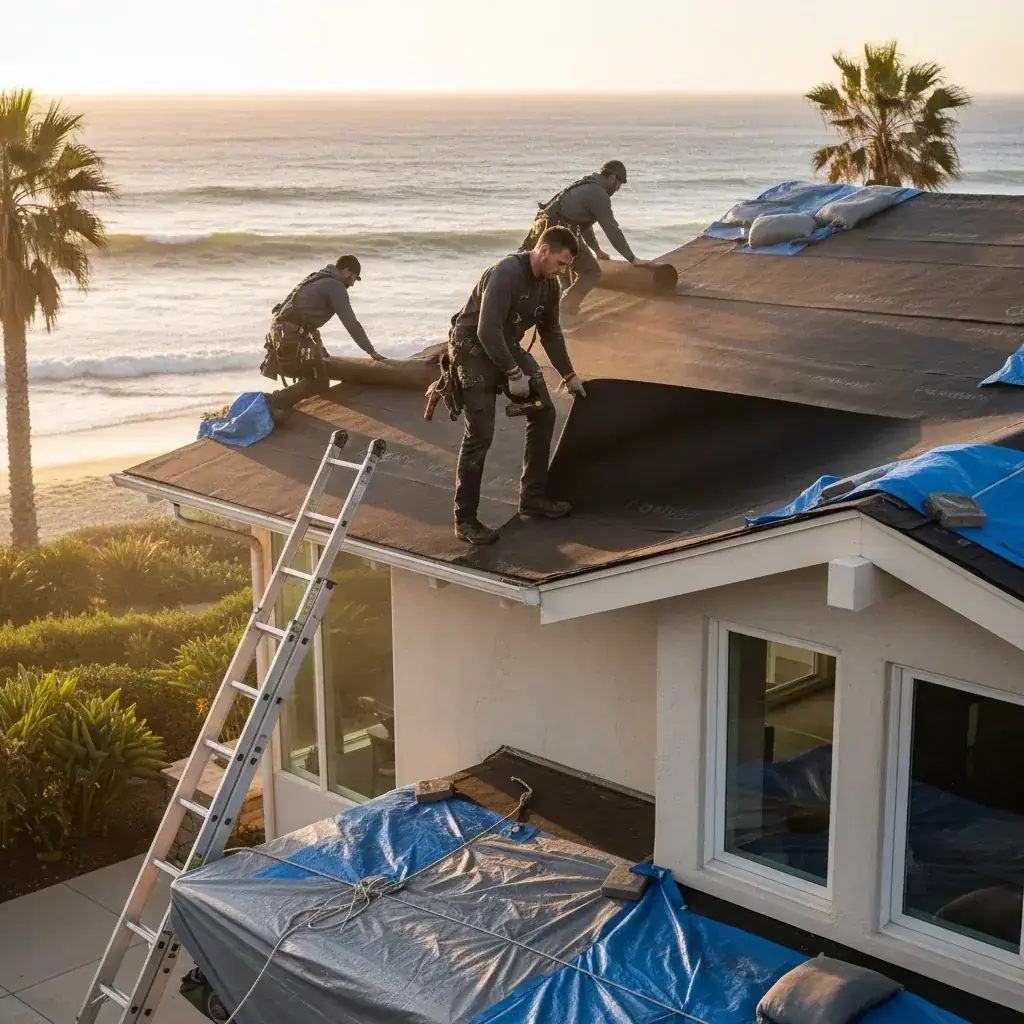
By volume, architectural shingles are a common roof replacement choice in Oceanside. They fit many ranch and traditional houses. Algae-resistant products matter in marine air. Warranties are manufacturer documents. Read the actual coverage, including coastal exclusions, instead of trusting a brochure word like “lifetime.”
Concrete tile
Concrete tile is a Southern California look, and many HOAs require it. It is heavy. The structure has to support it. Cost often hinges on whether existing tile can be lifted and relayed over new underlayment or whether a full tear-off and new tile are required. Cracked or slipped tiles are a maintenance issue on any remaining field. See reusing concrete roof tiles during a reroof.
Standing seam metal
Metal is a premium coastal option when the coating and fastening are specified for salt. Lightweight assemblies can help on some structures. “Will not rust” is only as true as the finish, the cut edges, and the fasteners. Ask for the coating system by name and for coastal installation details in the scope.
Tile and metal typically price above a comparable shingle tear-off because of labor, underlayment, and flashing complexity. How much above is a bid, not a multiplier we will invent.
Permits, HOAs, and the dry-season window
City of Oceanside permits
Ask the City of Oceanside whether this replacement needs a building permit. The Building Division inspects at staged points when a permit is in play, including after tear-off when sheathing is visible. Review current requirements on the City of Oceanside website and verify the contractor’s license with the CSLB. Permit fees are set by the city. Ask the bidder to show the permit line instead of guessing a number from an old blog.
Navigating HOAs
From Ocean Hills Country Club to newer tracts, many Oceanside communities need architectural approval for color, profile, and material. Get that list before you sign. A non-approved roof can mean fines and a tear-off. Independent roofers in our network can help assemble the submittal. The HOA’s written rules still control.
Beating the rainy season
Qualified crews can work year-round in San Diego County. The easier planning window is still the drier months. Start HOA and material decisions early enough that the crew is not racing the first winter storm. December rain is when incomplete tear-offs get stressful.
Why coastal underlayment and fasteners matter here
Once the field is on, you never see underlayment or nails. In Oceanside those two items decide whether the roof lasts or sheds fasteners.
Synthetic underlayment resists tearing better than old felt and does not soak the same way. It is the usual professional backup on a north county coastal roof. Fastener corrosion, sometimes visible as rust streaks, is how shingles lift and tiles slip. Stainless or hot-dip galvanized fasteners are a small share of a quality coastal job and a large share of whether it holds. For county-wide cost-driver context, see the San Diego roof replacement cost guide and cost to reroof a house in California. Neither page is a bid for your Oceanside house.
Frequently asked questions
How much does a roof replacement cost in Oceanside, CA in 2026?
There is no honest single number that covers shingle, tile, and metal on every ZIP. Get three written quotes on the same scope. West-of-I-5 jobs often add coastal fasteners and underlayment. Tile and metal usually land above a comparable shingle tear-off. The matched C-39 prices the actual roof.
What is the cost per square foot for roofing in Oceanside?
Per-square-foot marketing numbers skip pitch, layers, and salt spec. Ask for a total that includes tear-off, underlayment, flashing, permit, and labor, then divide only if you need a sanity check against another complete quote.
Do I need a permit for a roof replacement in Oceanside?
Yes in the usual full-replacement case. Your contractor should pull the permit and schedule inspections. Confirm the current fee with the city, not with a blog.
How long does a roof replacement take in Oceanside?
Many single-story shingle tear-offs finish in a short run of dry days. Tile, steep pitches, and deck repairs take longer. Weather in winter can add days.
What roofing material is best for a coastal Oceanside home?
West of I-5, standing seam with a coastal-grade finish, concrete tile with corrosion-resistant fasteners, and architectural shingles with stainless nails and synthetic underlayment are all used. “Best” is the assembly that matches structure, HOA, and a written spec the C-39 will stand behind.
How do HOA rules affect my roof replacement in Oceanside?
Many associations require written approval of material, color, and style before work. Get that approval before you sign a contract.
For the full range of roofing work the independent pros in our network handle locally, see roofing in Oceanside.
When to call us
If your Oceanside roof is aging or you are planning a replacement, start with a licensed inspection and a written scope. We do not bid the job ourselves.
Call us at (760) 750-5557 and we’ll connect you with a vetted local roofer.