A new San Diego roof usually carries more than one warranty. Mixing them up is how claims get denied.
Top Pro Roofing SD is a referral service. We connect you with a vetted CSLB C-39 roofer. We do not install roofs, and we do not write manufacturer or workmanship coverage. The installer and the product maker do. Call (760) 750-5557.
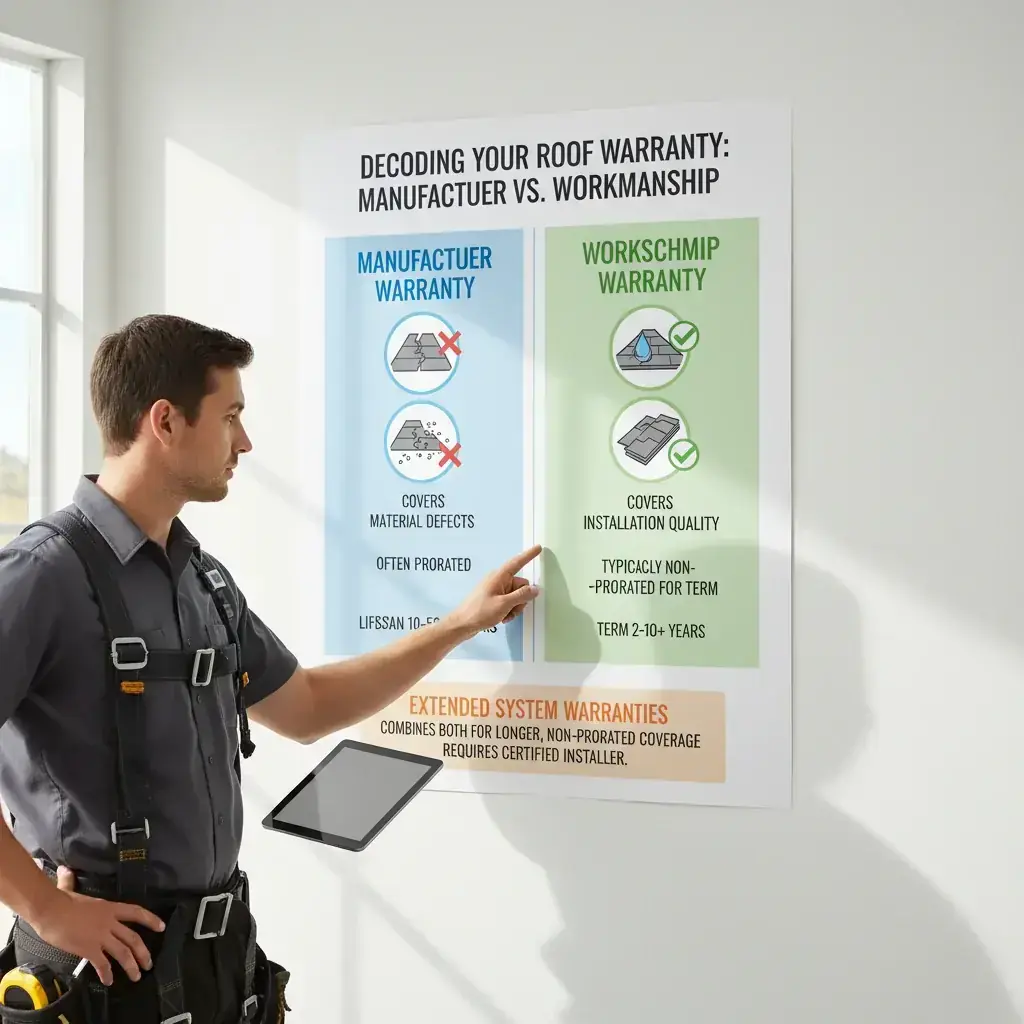
There are three layers. A manufacturer warranty covers defects in the shingles, tile, or panels. A workmanship warranty covers how the roof was put on. A registered system warranty (names like Golden Pledge or Platinum Protection) exists only when a certified installer registers a matching assembly. Your roofer should hand you a roof warranty certificate at job close: installation date, products, terms, and who to call. Keep it with the home file. You will need it at sale.
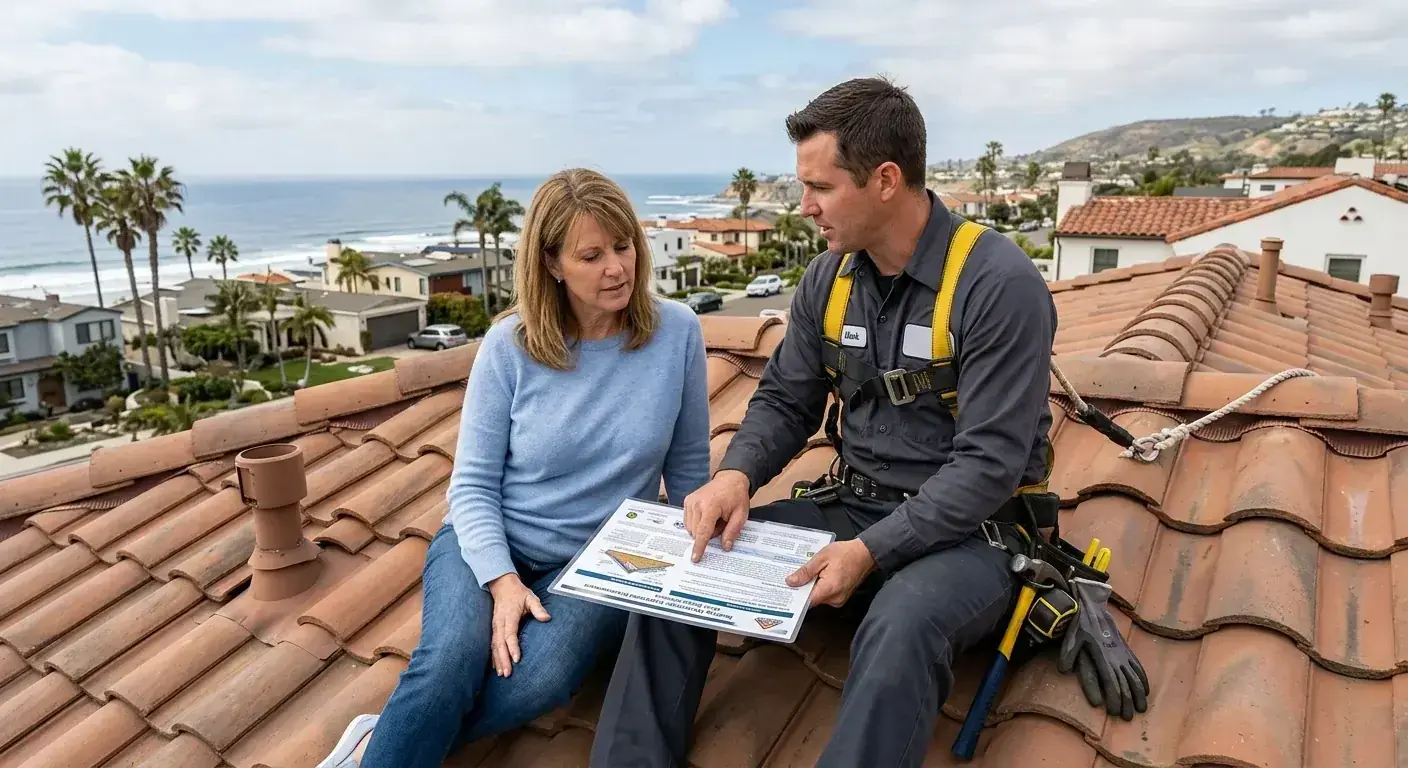
Manufacturer vs workmanship vs system warranties
Two warranties should exist on every replacement. The third exists only if someone registered the system.
The manufacturer warranty is about the product. If a shingle cracks, blisters, or delaminates because of a manufacturing flaw, that claim runs to the brand, not the labor. It does not cover a boot that was flashed wrong.
The workmanship warranty is the installer’s promise on labor. Leaks from a missed nail, a valley that was lapped backward, or a chimney pan that was never tied in belong here. Materials can be fine and the roof still fail if the work is wrong.
A system or enhanced warranty is not automatic. GAF, Owens Corning, CertainTeed, and others sell registered programs that require listed underlayment, starter, ridge, and vents plus a contractor in that brand’s certified network. Terms, labor coverage, and transfer rules live in the current program booklet. Do not treat a blog, a sales flyer, or a verbal “50-year” as the contract. Read the certificate the manufacturer actually issues.
What a manufacturer shingle warranty really covers
Read the booklet for the exact product line on your roof. Typical material warranties address manufacturing defects: premature cracking, blistering, granule loss far ahead of the stated life, or delamination. Many start with a stronger period, then prorate. Prorated means the payout is a shrinking share of material cost as the roof ages. Labor is often excluded on the basic tier.
What they usually do not cover: weather that exceeds the listed wind or hail rider, poor installation, skipped maintenance, or damage from later trades (solar, HVAC, satellite). Coastal algae staining may need a separate algae-resistance feature. It is not the same as a defect warranty. For how San Diego sun and heat age asphalt, see what deteriorates asphalt shingles fastest in San Diego.
If a storm is the issue, that is often an insurance file, not a factory claim. See whether you should file a roof insurance claim.
Why the workmanship warranty is the one homeowners forget
Most leaks we see referred in San Diego are installation and flashing, not a bad shingle lot. Flashing at pipes, walls, and chimneys, nail pattern, and underlayment laps decide whether water stays out. A strong workmanship term is the installer standing behind that work.
Duration is whatever the written warranty says. Ask for it in the contract before you sign, not after the last check. Compare coverage, not slogans. Confirm the contractor’s CSLB license at the CSLB license check. A roof inspection is how you document condition if you never got paperwork.
Your roof warranty certificate: what it should list
The certificate is the one-page (or digital) proof that ties the job to coverage. It is not the manufacturer’s booklet and not the construction contract, though you should keep all three.
A complete certificate should list:
- Property address the coverage applies to
- Installation date (completion, not contract signing)
- Contractor name, CSLB number, and contact
- Materials: brand, product line, and color
- Manufacturer term: length and whether it prorates
- Workmanship term: what labor is covered and for how long
- Transfer rules: if it can pass to a buyer, how, and the deadline
- Claim path: who you call first and what photos or invoices they want
Ask for this before final payment. If the crew cannot produce it, that is information about the job.
Registered system warranties (GAF, Owens Corning, CertainTeed)
Enhanced programs exist when a certified installer registers a full matching system: listed underlayment, starter, hip and ridge, and ventilation from that brand’s current spec. Using random leftover felt under a “Class A” shingle can knock you out of the registered tier even if the shingle bundle looks the same from the street.
Program names and year counts change. Golden Pledge, Platinum Protection, and similar labels are manufacturer products. The current booklet, not a neighbor’s 2018 flyer, sets labor years, non-prorated windows, and whether wind riders are included. On a roof replacement, ask the C-39 to show the registration path in writing: who submits it, when you receive the manufacturer copy, and what happens if registration is late.
Transferring coverage when you sell the house
A transferable warranty can help a San Diego sale. It only helps if you actually transfer it.
Many manufacturer system warranties allow one transfer to the next owner. Remaining time usually continues. It does not reset. Some programs prorate after transfer. Your certificate and the current transfer form control that.
Typical paperwork:
- The original roof warranty certificate
- Proof of transfer (deed or closing disclosure)
- Original invoice showing date and products
- The manufacturer’s current transfer form
- Any transfer fee the current form lists (we will not invent that amount)
Timing is the part that voids coverage. Many makers require registration within a stated window after closing, often measured in days. Read your form. Start before closing if you are listing.
A warranty transfer is not a roof certification for home sale. A cert is a signed condition report. Some escrows want both.
What voids a roof warranty in San Diego
Common void paths, pulled from typical manufacturer booklets. Your document wins if it differs.
- Unlicensed or DIY repairs after the install
- Skipped maintenance: clogged gutters, debris, ponding that was left to sit
- New penetrations (skylights, solar, dishes) without a method the warranty allows
- Changed attic ventilation that traps heat or moisture
- Pressure washing that strips granules or drives water under tile
- Missing intake or exhaust when the warranty required a ventilated attic
Ask before anyone else works on the roof. Solar and HVAC change-outs are the usual surprise.
Questions to ask a roofer before you sign
- How long is the workmanship warranty, and what labor does it name?
- Are you in the manufacturer’s certified network for the system you are quoting, and can you show current status?
- Will I get the manufacturer booklet and a job-specific certificate?
- Who files the system registration, and when do I receive the manufacturer copy?
- What maintenance do I have to keep for the warranty to stay valid?
- Are you licensed and insured in California? Check CSLB yourself.
A referral through us still means you verify the license and read the warranty papers. We do not stand behind another company’s labor term.
Frequently asked questions
What is a roof warranty certificate?
It is the document the installer issues at close that lists date, materials, contractor, manufacturer term, workmanship term, and how to claim. It is the page you keep for a sale or a later claim.
How do I get a roof warranty certificate in San Diego?
The C-39 should give it to you at completion, with the manufacturer’s booklet. If you never got one, ask in writing. Registered system certificates often come from the manufacturer after the installer submits the job.
Can I transfer my roof warranty when I sell?
Often once, if the program allows it. You will need the certificate, closing proof, the original invoice, and the current transfer form. Deadlines are short. We will not quote a fee. The form lists it.
Is a roof warranty certificate the same as a roof certification?
No. The certificate documents coverage on a new or recent roof. A roof certification is an inspection letter on current condition, often for buyers or lenders. See roof certification for home sale in San Diego.
What voids a roof warranty in California?
Unlicensed repairs, uncoordinated solar or skylights, pressure washing, ignored drainage, and attic ventilation changes are the usual list. The booklet is the authority.
How long does a roof warranty last in San Diego?
Whatever the written terms say for that product and installer. Basic material terms, registered-system terms, and installer labor terms are different clocks. We will not invent year counts. Read the papers for the roof you actually have.
When to call us
If you need a warranty certificate explained, want a licensed C-39 to inspect before a sale, or are planning a roof replacement in San Diego, call Top Pro Roofing SD at (760) 750-5557. We connect you with a vetted roofer. They issue the paperwork. We do not.