In San Diego, tile costs about $8 to $15 per square foot installed and lasts 50 to 100 years, but weighs 6 to 12 pounds per square foot. Metal runs $7 to $16 per square foot, lasts 40 to 70 years, and weighs just 1 to 3 pounds. Tile wins on heritage looks and longevity. Metal wins on weight, fire, and energy savings. For more on this, see 2026 tile roof replacement cost in San Diego.

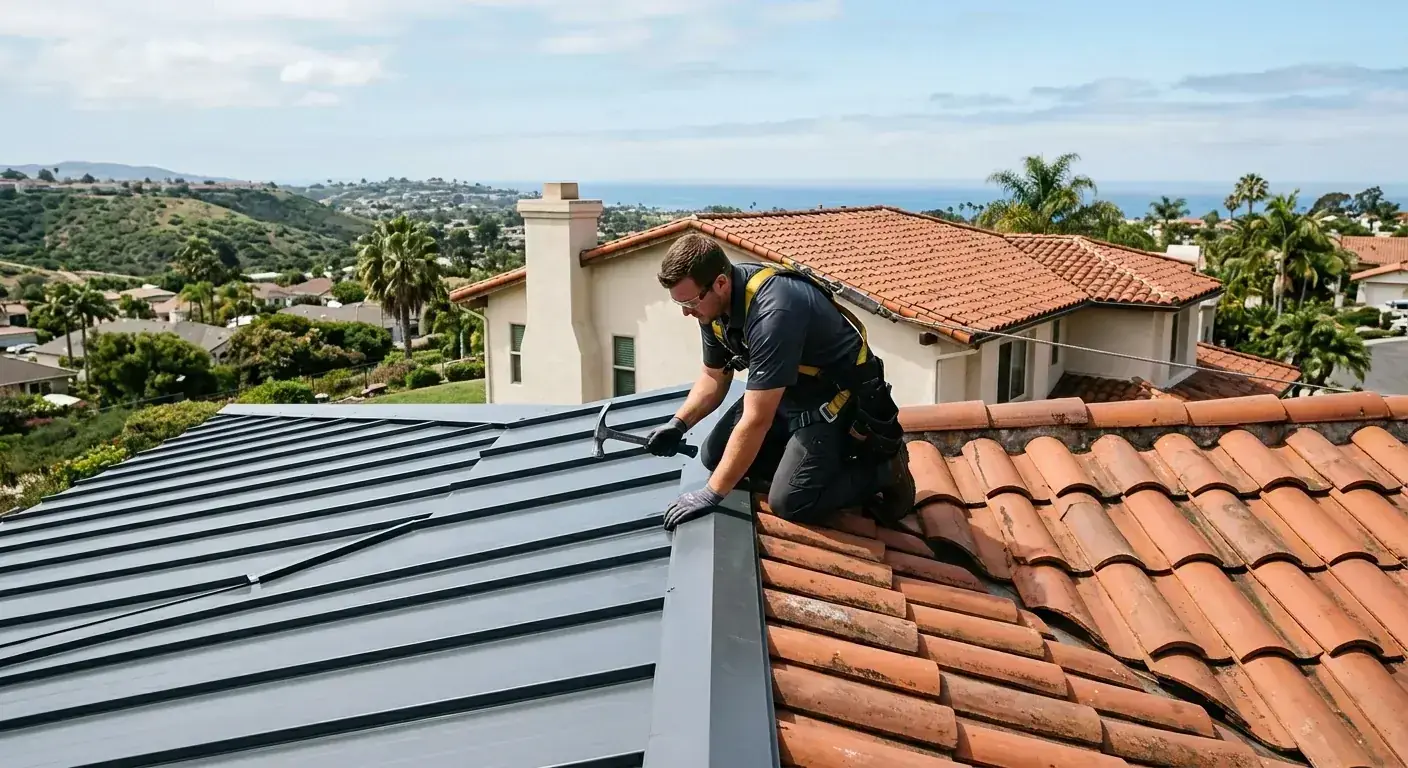
A clean, realistic photograph illustrating 'tile roof vs metal roof in san diego

Many San Diego homeowners find themselves weighing a tile roof vs metal roof when considering a major upgrade or a full roof replacement. You’re looking for a roofing material that performs well, enhances your home’s curb appeal, and fits your budget. This guide breaks down the pros and cons of each, helping you make an informed choice that suits your specific needs and the local environment.

The San Diego context: sun, salt air, fire zones, and HOAs

San Diego’s environment is truly unique, and it plays a huge role in how different roofing materials perform. Our abundant sunshine is fantastic for everyday living, but it can be relentless on a roof. UV radiation causes materials to break down over time. For homes near the coast, salt air introduces a corrosive element, which some materials handle better than others. Beyond natural factors, we also contend with specific regulations and community guidelines.

Wildfire danger is another major concern across San Diego County, particularly in inland and canyon-adjacent communities. Roofing materials often need to meet strict Class A fire ratings to comply with local building codes, especially in designated high-fire severity zones. Both tile and metal roofing materials generally offer excellent fire resistance, making them strong contenders for fire-prone areas.

Finally, homeowners associations (HOAs) are common in many San Diego neighborhoods, from master-planned communities in Carmel Valley to historic districts in North Park. These HOAs often have strict architectural guidelines that dictate approved roofing materials, colors, and styles. Before committing to either a clay or Spanish tile roofing or a sleek metal roofing installation, it’s always wise to check with your HOA to understand their specific requirements. Considering these local factors upfront can save you significant time and potential headaches down the line.

Lifespan and durability head to head

When you invest in a new roof, you want it to last. Both tile and metal roofs boast impressive lifespans, often outperforming other materials like asphalt shingles. However, there are distinctions in their long-term durability.

Tile roofs, typically made from clay or concrete, are renowned for their longevity. With proper installation and occasional maintenance, a tile roof can easily last 50 to 100 years or even longer. They’re incredibly resistant to the sun’s harsh UV rays, which means they won’t degrade or fade significantly over decades. Tile is also impervious to rot and insect damage. While individual tiles can crack or break from impact (like falling branches or foot traffic), they’re generally easy to replace. In coastal areas, salt air has virtually no effect on tile, making it an ideal choice for seaside homes.

Metal roofs, particularly standing seam metal systems, also offer exceptional durability and a long lifespan, often ranging from 40 to 70 years, and sometimes even more. Modern metal roofing materials, such as steel and aluminum, are treated with specialized coatings that resist rust, corrosion, and fading, even in San Diego’s salt-rich coastal air. Metal is highly resistant to strong winds, hail, and fire. Unlike tile, it won’t crack under impact. The main considerations for metal are potential scratching of coatings (though repairs are possible) and the quality of the installation, which is critical for preventing leaks. Both materials stand up well to San Diego’s climate, but metal often requires less individual piece replacement compared to the occasional cracked tile. For more on this, see whether salt will damage a metal roof.

Upfront cost and long-term value

The initial investment for a new roof is often a primary concern for homeowners. When comparing a tile roof vs metal roof, both typically represent a higher upfront cost than asphalt shingles. However, their long-term value often justifies the initial expense, especially in a desirable market like San Diego.

Tile roofing, particularly authentic clay tile, usually has a higher material and installation cost than metal. This is due to the weight of the tiles, the labor-intensive installation process, and the specific structural requirements some homes need to handle the load. Concrete tiles can be a slightly more budget-friendly option than clay, but they still fall into the higher price bracket. Despite the initial cost, the exceptional longevity of tile roofs means you might never need to replace your roof again in your lifetime, leading to significant savings over multiple decades compared to materials with shorter lifespans. They also retain their aesthetic appeal for a very long time, contributing to strong resale value.

San Diego cost by type, per square foot installed (2026)

Here’s what San Diego homeowners actually pay, installed, for each material. A “square” is 100 square feet of roof, so multiply these numbers by your roof’s square count for a rough total.

Roofing materialCost per square foot (installed)Cost per square (100 sq ft)Typical lifespan
Concrete tile$8 – $12$800 – $1,20050+ years
Clay / Spanish tile$10 – $15$1,000 – $1,50075 – 100 years
Corrugated metal$6 – $10$600 – $1,00030 – 45 years
Metal shingles$10 – $14$1,000 – $1,40040 – 60 years
Standing seam metal$12 – $16$1,200 – $1,60050 – 70 years
Stone-coated steel$14 – $22$1,400 – $2,20040 – 70 years

Coastal homes pay a premium. Mid-grade standing seam steel runs about $11 to $14.50 per square foot installed near the water, and aluminum or zinc for true salt-spray resistance pushes $15.50 to $19. Inland homes in lower-cost zones often land at the bottom of each range. These figures cover material and labor but not tear-off, structural reinforcement, or permits, which we cover below.

Metal roofing, depending on the specific type (e.g., standing seam vs. metal shingles), can vary in cost. High-end standing seam metal roofs are often comparable to, or even slightly less than, premium tile roofs in upfront expense. While the material cost for metal can be substantial, the installation can sometimes be quicker than tile, potentially offsetting some labor costs. The long-term value of a metal roof is excellent. Its durability, low maintenance, and energy efficiency contribute to a strong return on investment. Metal roofs often qualify for energy-efficient tax credits due to their “cool roof” properties, reflecting sunlight and reducing attic temperatures. This can translate to lower utility bills, which adds to the long-term value. Moreover, both tile and metal roofs significantly boost a home’s curb appeal and market value in San Diego.

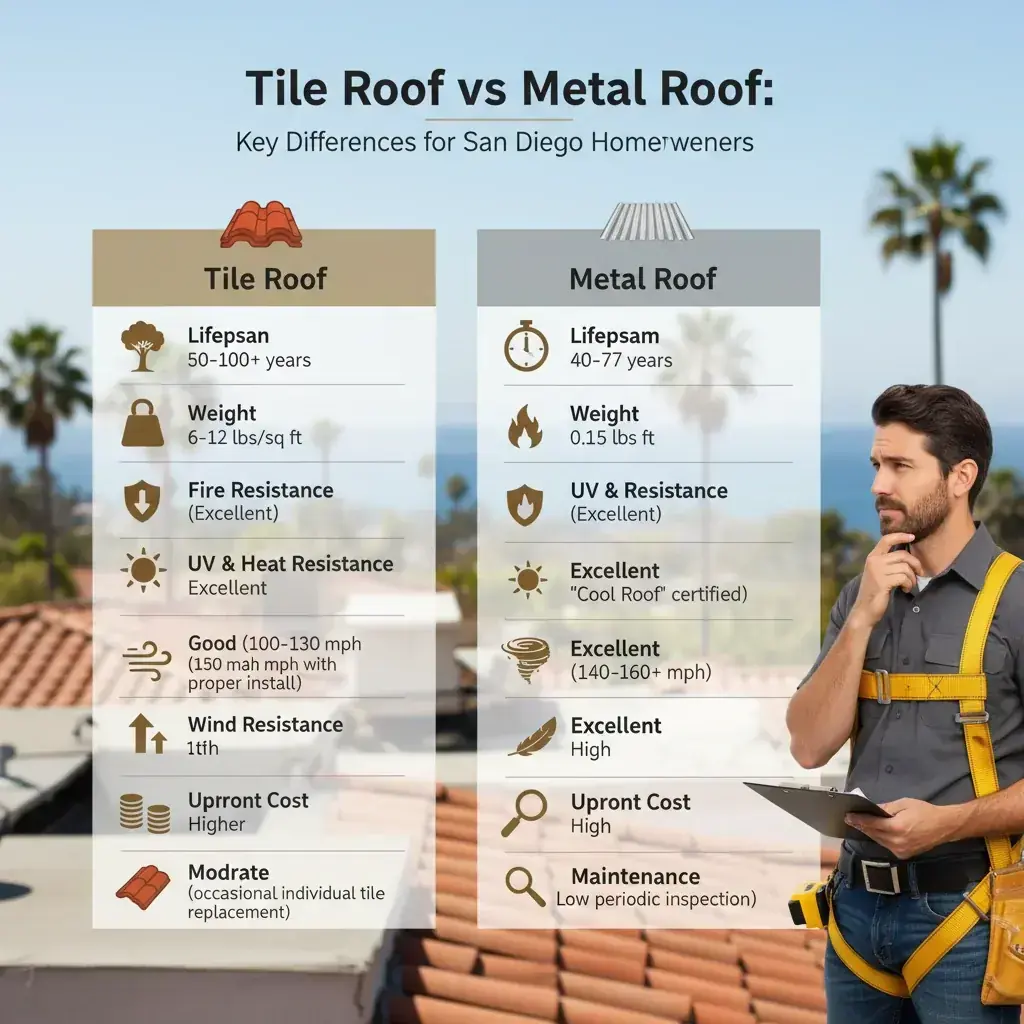
Infographic comparing key factors for tile and metal roofs in San Diego, including lifespan, cost, weight, and fire resistance.

Weight, structure, and what your home can support

The structural integrity of your home is a critical factor when choosing between a tile roof and a metal roof. These two materials have vastly different weight profiles, which directly impacts installation and potential structural modifications.

Tile roofs, especially traditional concrete or clay tiles, are significantly heavier than most other roofing materials. A typical tile roof can weigh anywhere from 6 to 12 pounds per square foot, or even more. For older San Diego homes, or those not originally designed for such a heavy load, this can be a major consideration. Before installing a tile roof, a qualified roofing contractor will often assess the existing roof structure and may recommend a structural engineer’s review. In some cases, your home might require additional reinforcement, such as strengthening rafters or adding support beams, to safely bear the weight of a new tile roof. This structural work adds to the overall cost and complexity of the project, so it’s essential to factor this into your decision.

Here’s how the weight stacks up. The difference is large enough to change what your home can carry without engineering work.

MaterialWeight per square footWeight per square (100 sq ft)Structural impact
Standing seam metal1 – 1.5 lbs100 – 150 lbsLightest. Fits almost any existing frame.
Stone-coated steel1.4 lbs140 lbsTile look at a fraction of the load.
Metal shingles1 – 2 lbs100 – 200 lbsNo reinforcement needed in most cases.
Concrete tile9 – 12 lbs900 – 1,200 lbsOften needs a structural review.
Clay tile6 – 10 lbs600 – 1,000 lbsMay need rafter or beam reinforcement.

A concrete tile roof can weigh six to nine times more than a metal one. On a 2,000-square-foot roof, that’s roughly 18,000 to 24,000 pounds of tile versus about 2,000 to 3,000 pounds of metal. Many San Diego homes built before the 1990s weren’t framed for that load. If you’re switching from asphalt shingles to tile, a contractor should pull a structural review, and the city or county may require an engineer’s stamp on the permit. Reinforcing rafters and adding support beams can add several thousand dollars to a tile project. Metal almost never triggers this.

In stark contrast, metal roofs are among the lightest roofing materials available. Depending on the gauge and type of metal, they typically weigh between 0.5 to 1.5 pounds per square foot. This lightweight nature offers several significant advantages. First, it places far less stress on your home’s structure, making it an excellent choice for older homes that might not easily accommodate a heavier roof without extensive modifications. Second, in some situations, a metal roof can even be installed over an existing roof (though a complete tear-off is almost always recommended for proper installation and warranty). The minimal weight makes metal a versatile option, opening up possibilities for homes where structural limitations might rule out tile. It’s crucial for any roof replacement to have an experienced professional evaluate your home’s specific structural needs regardless of the material you choose.

Look and curb appeal in different San Diego neighborhoods

The aesthetic appeal of your roof dramatically impacts your home’s overall look and curb appeal. In San Diego, where architectural styles range widely, both tile and metal roofs have distinct visual characteristics that can enhance or detract from a property’s charm, depending on its design and neighborhood context.

Tile roofs, particularly the iconic Spanish and Mediterranean styles, are deeply ingrained in San Diego’s architectural heritage. Their classic, wavy profiles and warm, earthy tones (red, terracotta, brown) perfectly complement stucco homes, haciendas, and mission-style properties prevalent in areas like Rancho Santa Fe, La Jolla, and much of the coastal corridor. Tile conveys a sense of timeless elegance, craftsmanship, and a connection to the region’s historical roots. For many HOAs in these communities, tile is the preferred, or even mandated, roofing material to maintain a consistent neighborhood aesthetic. The visual texture and depth of a tile roof are unmatched, adding significant character.

Metal roofs, on the other hand, offer a diverse range of styles that can suit both traditional and contemporary homes. Standing seam metal roofs provide a sleek, modern, and clean look with their distinct vertical lines, often chosen for homes in more contemporary or industrial-inspired neighborhoods such like North Park, South Park, or parts of Downtown. Metal can come in a wide array of colors, from subdued grays and bronzes to more vibrant hues, allowing for significant customization. Beyond standing seam, metal can also be fabricated to mimic the look of shingles, shakes, or even tile (stone-coated metal), offering versatility for homeowners who desire the benefits of metal with a more traditional appearance. The choice often comes down to harmonizing with your home’s existing architecture and the general feel of your San Diego neighborhood.

Stone-coated steel: the tile look without the tile weight

There’s a third option a lot of San Diego homeowners don’t know about. Stone-coated steel is a metal panel pressed into a tile or shake profile and coated with stone granules. From the street, it reads as a Spanish or Mediterranean tile roof. Up close and on the structure, it behaves like metal.

This matters most for two situations. The first is an HOA that mandates a tile look. Many master-planned communities won’t approve standing seam, but stone-coated steel often passes because it mimics the approved profile. Check with your board first, but it opens a door that plain metal can’t.

The second is an older home that can’t carry real tile. Stone-coated steel weighs about 1.4 pounds per square foot, roughly 140 pounds per square. Concrete tile runs 900 to 1,200 pounds per square. That’s the same tile appearance at about one-eighth the load, so you skip the structural reinforcement that a heavy tile roof would force.

The tradeoff is cost. Stone-coated steel runs $14 to $22 per square foot installed in San Diego, putting it at the top of the metal range and above most concrete tile. You’re paying for the tile look plus metal’s fire rating, wind resistance, and light weight in one product. For coastal homes worried about salt corrosion, the stone coating and underlying steel hold up well, and aluminum-based versions resist salt spray even better. If you love the tile aesthetic but your home or HOA fights you on real tile, this is the option worth pricing out. We can quote both side by side so you see the real difference for your roof.

How to decide: a simple framework

Choosing between a tile roof and a metal roof for your San Diego home doesn’t have to be overwhelming. By breaking down your priorities, you can create a clear framework for your decision. Consider these key factors:

  1. Budget: How much are you prepared to invest upfront? While both are premium options, tile often has a higher initial cost due to its weight and installation complexity. Metal can be slightly less expensive, especially for certain styles, and offers strong long-term value through energy efficiency.
  2. Architectural Style & HOA Rules: What aesthetic suits your home best? Does your house have a Spanish or Mediterranean design that cries out for tile? Or would a modern, sleek metal roof complement its lines? Crucially, check with your HOA. They might have strict guidelines on materials and colors, which could immediately narrow your options.
  3. Long-Term Value & Longevity: Are you looking for a “forever roof” that could last 100 years? Tile is a contender. Do you want something highly durable, low maintenance, and energy-efficient for 50+ years? Metal fits that bill. Both offer exceptional longevity and ROI compared to asphalt shingles.
  4. Structural Considerations: Is your home’s existing structure strong enough to support the significant weight of a tile roof without costly reinforcements? Metal roofs are lightweight and almost universally compatible with existing structures, making them a simpler option from an engineering standpoint.
  5. Climate Performance: Both materials excel in San Diego’s sunny, dry climate and high-fire zones. Metal roofs can offer superior hail resistance and often provide better “cool roof” benefits, reflecting more sunlight and potentially lowering energy bills. Tile is virtually unaffected by UV and salt air.

Ultimately, the best way to make a confident decision is to discuss your specific home, priorities, and budget with experienced roofing professionals. They can provide a personalized assessment and help you weigh the nuanced pros and cons for your unique situation.

When to call us

When you’re facing a significant decision like replacing your roof, especially between premium materials like tile and metal, you need expert guidance. It’s not just about picking a material; it’s about proper installation, understanding local codes, and ensuring long-term performance. Call us at (760) 750-5557 for a same-day estimate and a side-by-side comparison tailored to your San Diego home.

Frequently asked questions

Is metal or tile cheaper in San Diego?

Tile is usually cheaper upfront. Concrete tile runs about $8 to $12 per square foot installed, and standing seam metal runs $12 to $16. But tile can need structural reinforcement on older homes, which closes the gap. Over a 50-year horizon, metal often costs less to own because it needs almost no maintenance.

How much heavier is a tile roof than a metal roof?

A lot. Concrete tile weighs 9 to 12 pounds per square foot. Standing seam metal weighs 1 to 1.5 pounds. On a 2,000-square-foot roof, that’s roughly 20,000 pounds of tile versus about 2,500 pounds of metal. Many older San Diego homes need rafter reinforcement before they can carry tile.

Which roof lasts longer, tile or metal?

Tile lasts longer on paper. Clay tile can last 75 to 100 years and concrete tile 50-plus. Standing seam metal lasts 50 to 70 years. Both outlast asphalt shingles by decades, so for most homeowners either one is effectively a lifetime roof.

Can I get the tile look without the tile weight?

Yes. Stone-coated steel is a metal panel pressed into a tile profile and coated with stone granules. It weighs about 1.4 pounds per square foot, looks like Spanish tile from the street, and often passes HOA tile requirements. It runs $14 to $22 per square foot installed in San Diego.

Which roof holds up better near the San Diego coast?

Both do well, but the metal matters. Tile is virtually unaffected by salt air. For metal near the water, aluminum or zinc resists salt corrosion better than standard steel, though it costs up to 25 percent more. Coated steel still performs well a few miles inland.

Do tile and metal roofs meet San Diego fire codes?

Both can. Tile and metal both reach Class A fire ratings, the highest available, which most high-fire-severity zones in San Diego County require. Always confirm the specific product’s rating and your local code before you buy.