Carmel Valley is not one HOA with one roof list. It is master associations and sub-associations, each with its own architectural process. The only binding rules for your lot are the CC&Rs, the current architectural guidelines, and any written board approval. Confirm those documents before you sign a reroof or change covering.
Top Pro Roofing SD is a referral service. We connect San Diego County homeowners with licensed local roofers. We do not sit on architectural committees, and we do not publish a Carmel Valley price list. Call (760) 750-5557.
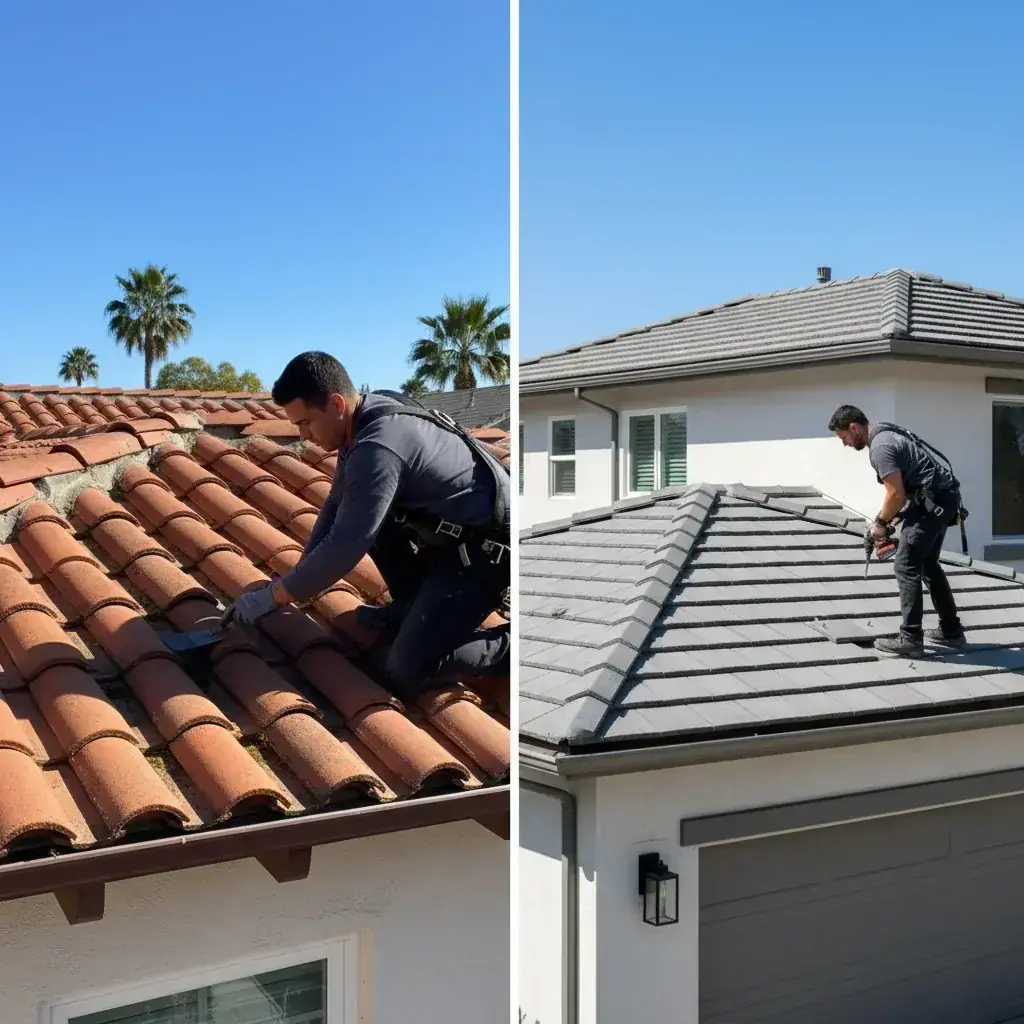
Confirm the CC&Rs first
Pull, in this order:
- The CC&Rs recorded against your lot, plus any amendments.
- The current architectural or design guidelines from the management portal or manager. Closing packets go stale.
- The architectural application, neighbor-notice rules, and meeting calendar.
- Any overlay that is not the HOA: City of San Diego permits, Information Bulletin 123 where it applies, Title 24 cool-roof questions, and WUI or Class A covering rules if the parcel is in a designated area.
If those papers require tile, a specific profile, a blended color, or a listed manufacturer, that is the spec. A neighbor’s roof is not a variance. Adjacent planned communities such as Rancho Santa Fe and Fairbanks Ranch have their own documents. Do not copy them.
Related process for boards and shared roofs: HOA roof replacement contractor. Adjacent community process (still confirm that tract’s papers): Scripps Ranch HOA roof requirements.
Carmel Valley’s HOA landscape
When people say “the Carmel Valley HOA,” they usually mean their sub-association.
Pacific Highlands Ranch. Newer northern section, largely 2000s and 2010s build-out. Planned-community design controls are typically tight. Confirm whether your tract requires tile and a listed palette.
Del Mar Mesa. West and southwest of Pacific Highlands Ranch. Mix of custom and semi-custom homes. The Del Mar Mesa Specific Plan can sit on top of sub-HOA rules. Confirm both layers.
Original Carmel Valley sub-areas. Neighborhoods built from the late 1980s through the late 1990s, including names you will hear such as Carmel Country Highlands, Carmel Creek, Sea Country, and Village Square, plus others. Each can have its own architectural committee. The rules often rhyme. They are not identical.
Build year is a clue to which packet you need, not a substitute for the packet. If the home was built before 1995, you are often in an original sub-association. After 2005 you are often in Pacific Highlands Ranch or a Del Mar Mesa sub-HOA. In between, read the closing file and the current portal.
Covering type is a document question
Many Carmel Valley tracts were built with concrete tile and keep a tile look from the street. That is a pattern, not a county law. Your CC&Rs may:
- Require concrete tile, or tile generally
- Allow clay if it matches profile and color
- Limit or forbid asphalt shingles, wood shake, standing seam, or composites
- Treat stone-coated steel “tile-look” panels as a case-by-case item
- Require a sample, manufacturer sheet, and CSLB number with the application
We have not audited every Carmel Valley sub-association’s current guidelines. Do not treat this page as an approval. If you bought a tile roof, plan for tile until the documents say otherwise. Clay versus concrete tradeoffs: concrete vs clay tile. Shingle climate notes are a different product class: what deteriorates asphalt shingles.
Color and profile
Planned communities often control color so roofs read as one surface from the street. Many guidelines prefer blended factory mixes (two or three close shades) over a single flat color. Earth, terracotta, and slate or charcoal blends all appear in North City tracts. Which list applies is on your guideline sheet.
A sketch of what you often see from the street, not a spec:
| Area | What you often see | Still confirm |
|---|---|---|
| Pacific Highlands Ranch | Low-profile or flat tile, earth or slate blends | Current palette and profile list |
| Del Mar Mesa | Flat tile, some S-tile | Specific Plan plus sub-HOA |
| Carmel Country Highlands | S-tile, some flat; terracotta or earth blends | That committee’s list |
| Carmel Creek and Sea Country | S-tile; earth or terracotta blends | That committee’s list |
| 4S Ranch (adjacent, not Carmel Valley) | S-tile and flat tile | Separate master HOA |
A color chip in a binder can look fine and still fail as a solid field on a large roof. If the board requires a full tile sample on site, do that before you lock the order.
Design review packet
Packets vary. Typical contents:
- Architectural review application from the portal or manager.
- Photos of the current roof, street elevations, and sometimes neighboring roofs for context.
- A physical tile sample or manufacturer color chip, as required.
- Manufacturer specification sheet: brand, profile, color code, weight, warranty documents as issued.
- Contractor legal name, CSLB license number, insurance certificate, and sometimes the proposal. Verify at the CSLB license check.
- Neighbor notification where the guidelines require it.
Submit the way the association requires. Incomplete packets wait for the next meeting.
Do not treat a signed contract as HOA approval. If the board changes color, profile, or brand, you need room to revise the order. A workable sequence: comparable bids with a named product, submit, written approval, then sign. Roofers who work these tracts regularly expect that order. Pressure to sign before written approval is a reason to pause.
Lead time
Architectural committees often meet monthly or twice a month. A late packet waits. An incomplete packet bounces. Conditional approval pending a better sample adds another cycle. Summer and holiday calendars can skip a meeting.
Treat 30 to 60 days as a planning buffer many homeowners use, not a promise in your CC&Rs. Read the guideline for the association’s stated review period. Ask the manager for the next meeting date before you schedule tear-off.
| Stage | What to do |
|---|---|
| Gather docs and samples | Start while bids are still comparable, not after you lock a start date |
| First board response | Submit complete, just after a meeting if the calendar works that way |
| Questions or resubmit | Match profile and blend to the written list |
| Written approval | Keep a PDF in the job file before materials ship |
Common rejection themes (still confirm your list)
These are process failures, not a claim that we sat in those meetings:
- Color or a single-color field when the list requires a blend
- Profile that does not match the existing roof when match is required
- Asphalt shingle on a tile-required lot
- Incomplete packet
- Contractor license that does not check out as an active C-39
- Sample that does not match the installed look the board expects
Coordinating roofer and HOA
- Get written bids from CSLB-licensed tile roofing contractors on the same scope.
- Name manufacturer, profile, and color blend on the application. Do not sign if you still need flexibility.
- Submit with the contractor’s legal name and license number.
- Wait for written approval. Tentative scheduling is fine. Material orders that cannot be changed are not.
- Sign after approval. Confirm permit responsibility for the City of San Diego address.
Stone-coated steel and other substitutes
Some associations now consider stone-coated steel panels that read as tile from the street. Others still treat metal as a variance. Weight, Class A assembly language, and warranty documents belong in the packet if the guidelines allow the product. Coastal salt and close-range appearance are board questions, not a blog verdict.
Ask the sub-HOA in writing before you bid a substitute. Adjacent sub-boards under the same master can differ. Climate context without a product promise: best roof types for Southern California.
Friction after approval
- Brand substitution. If supply changes the approved SKU, notify the HOA in writing before install. Some boards require a resubmit.
- Batch color. Photograph delivered pallets against the approved sample before they go on the roof.
- Visible metal. A few guidelines specify flashing metal or underlayment class where it shows. Conditions of approval are binding.
Budget without a blog rate
Tile work is labor-heavy: weight, underlayment, penetrations, access. Carmel Valley lots can be large and gated. We will not invent a 2026 Carmel Valley total or a per-square tile rate.
Compare line-item proposals. A bid that only relays existing tile and replaces underlayment is a different scope from a new covering. Your HOA may still require an application for a relay if the change is visible. Variables: tile roof cost context and tile replacement context. Those pages still do not replace this association’s documents.
FAQ
Can I replace a Carmel Valley tile roof with shingles to save money? Only if your current CC&Rs and guidelines allow it. Many tile tracts do not. Confirm in writing. Do not assume a cheaper covering will pass design review.
How long does HOA approval take? Whatever your guidelines and meeting calendar say. Homeowners often plan 30 to 60 days. Summer can run longer. Ask the manager.
Do I need to submit for a tile relay, not a full replacement? If the guidelines say any visible roof change needs review, submit. A stop-work notice mid-project costs more calendar than a packet.
Can I pick any “tile colored” blend? Usually no. Select from the current approved list.
What if the contractor wants a different brand mid-project? Stop. Notify the HOA in writing. Do not install an unapproved SKU.
Are solar panels part of the roof application? Often a separate application. Timing both with one lift can still be worth asking. Read both guideline sections.
Can I appeal a rejection? If the documents provide an appeal or variance path, use that path. Color and profile denials often stay denied. Submit what the list already allows.
Ready to start
Sequence: CC&Rs and current guidelines, then comparable bids, then submit, then sign. Call (760) 750-5557. We will connect you with a licensed local roofer who can help assemble the product sheet and photos the board asked for. You contract with that roofer. We do not vote on your application.
WUI overlay if the parcel is designated: wildfire-resistant roofing. City permit path: roofing permit by city.