Corrugated metal roofing is a panel with a repeating ridge, rib, or wave. Fasteners are often through the panel and visible. Standing seam uses raised seams and typically hides the clips. For a San Diego house, compare the named product, attachment, trim, and exposure, not the word “metal” alone. Top Pro Roofing SD refers. We do not install. Call (760) 750-5557.
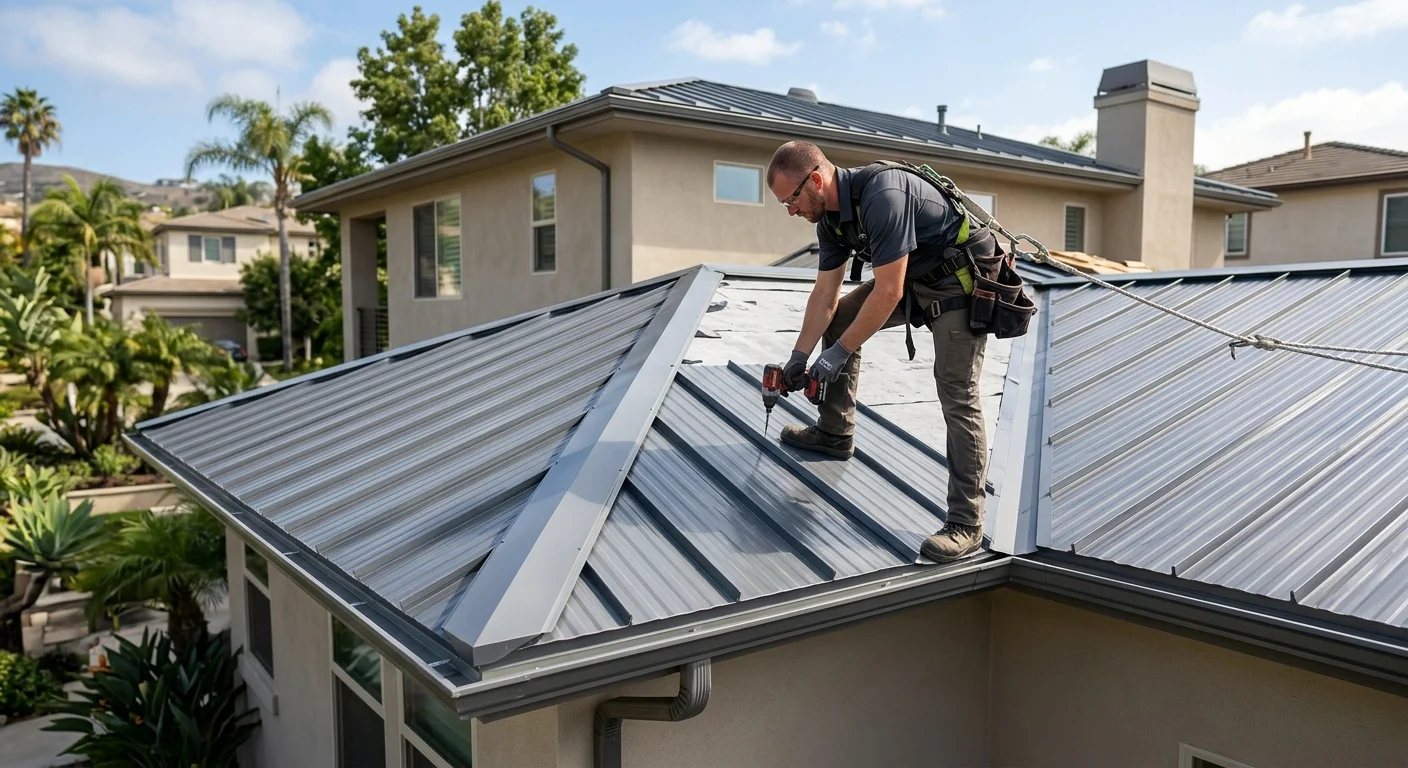
How corrugated panels differ from standing seam
The profile is the easy visual. Corrugated panels carry a repeating high-low pattern across the sheet. Standing seam uses distinct raised seams between flatter pans. The name does not identify gauge, coating, underlayment, or fastening.
Ask how each proposed panel attaches. Through-fastened corrugated systems put screw heads and washers in the weather. Standing-seam systems usually clip under the seam. Do not infer the method from a showroom photo. The written product sheet should answer it.
Also compare panel width, overlap, closure strips at eaves and ridges, finish, and trim. Two products both sold as corrugated metal roofing can have different installation instructions. The roofer should name manufacturer, profile, and color system.
For the other profile, see standing-seam metal roofing. Framing under commercial metal buildings is a different conversation: roof purlins.
California’s C-39 classification includes metal roofing systems. Check the independent contractor at the CSLB license lookup. Review the trade at the C-39 classification.
Why exposed fasteners belong in the inspection, not as a slogan
Through-fastened panels depend on the washer and the hole remaining weathertight. UV, thermal movement, and overdriven or missing screws are inspection items. A proposal that says “metal roof, low maintenance” without naming fastener type, placement, and replacement method is incomplete.
Ask:
- Are fasteners exposed or concealed?
- What washer and screw product is specified?
- How will cut edges, overlaps, and penetrations be closed?
- What does the manufacturer say about walking the panels after install?
Do not treat a lifespan figure from a national blog as the warranty on your house. Product warranties and workmanship terms come from the documents attached to the proposal.
Where panel shape affects the roof plan
A house roof is not one rectangle. Ridges, hips, valleys, eaves, walls, vents, skylights, and pipes all interrupt the profile. Corrugated high-low geometry has to be flashed at each of those lines. Generic “metal trim” is not a detail.
Ask for a layout that shows where full panels fit and where cuts occur. Short hips and additions meeting an older house need their own notes. Mark every penetration found on the inspection. Say whether each stays, moves, gets new flashing, or is excluded.
The deck and underlayment are part of the assembly. If the project removes the existing covering, the proposal should say what happens if concealed deck damage is found. Roof replacement is how we connect homeowners with independent local pros for that scope.
HOA and architectural review can restrict panel profile and color. Read the CC&Rs for the lot. Do not assume corrugated is allowed because a neighbor has it.
What coastal versus inland exposure changes
“San Diego” is not one exposure. A house near the coast in Oceanside, La Jolla, or Point Loma is not the same setting as Escondido or El Cajon. The proposal should describe this property.
Confirm current climate normals on NOAA’s published tables if you need a number. Coastal belts, inland valleys, and mountains are not one station. That figure does not pick a panel.
Ask the roofer to document the exposure used for product selection: panel, finish, fasteners, cut-edge treatment, flashings, and trim. Point to the manufacturer documents used. There is no verified corrosion calendar that applies to every corrugated product at every San Diego address. Salt exposure and metal roofing lists questions to take to that conversation.
Inland properties still need an address-specific review. Do not accept a coastal spec with the city name changed.
How roofers inspect an existing corrugated roof
Record visible conditions. Do not guess at concealed areas.
At fasteners: missing, tilted, raised, stripped, or mismatched screws. Note whether the design is through-fastened. If replacement fasteners are proposed, name the product and pattern.
At edges: eaves, rakes, ridges, and wall transitions. Separate observed condition from recommended change.
At penetrations: pipes, vents, skylights, and equipment, one by one. Sealant on a curb is an observation. It is not the name of a complete repair.
Stay off the roof unless you are trained for that access. Ground photos can start the file. They do not replace the roofer’s evaluation. Do not back out screws to “check” them.
What the written proposal should identify
Name the corrugated product: manufacturer, line, profile, finish, dimensions, and attachments. “Metal roof panels” is not enough.
List panels, fasteners, underlayment, closures, ridge and eave pieces, and penetration details. Name what stays. Show exclusions before you sign.
For properties in the City of San Diego, Information Bulletin 123 describes when roof-covering renewal needs a permit. Triggers include structural framing, sheathing or decking, certain material-weight changes, new sheathing over skip sheathing, and designated historic resources. Some like-for-like renewals on eligible residential properties are exempt when the bulletin’s conditions are met. Encinitas, unincorporated county, and other cities write their own rules. The proposal should name the permitting authority for this address.
Warranty language should identify the issuer and attach the written terms. Top Pro Roofing SD does not warrant work we do not perform. You contract with the independent roofer.
The proposal should name the contractor, license, project address, and agreed scope and price. Confirm the license through CSLB. For profile comparison, visit metal roofing.
When to call us
Call when you need a licensed roofer to inspect an existing corrugated roof or compare metal panel options. Top Pro Roofing SD will match you with an independent local professional who evaluates and performs the work. Call (760) 750-5557 and we’ll connect you with a licensed local roofer.