Pitched roofs shed water on their own and usually last longer in the same climate. Flat roofs (really low-slope) cost less structure to add, walk easier for HVAC and solar, and match a lot of new Encinitas and North Park infill. San Diego’s annual rainfall is low, around 10 inches in a normal year, so a low-slope roof can work. Ponding is still a design and drain problem, not a “we barely get rain” problem.
Top Pro Roofing SD is a referral marketplace. We connect San Diego County homeowners with independent CSLB C-39 roofers. We do not design roofs, pull permits, or publish a 2026 price card for either shape. Call (760) 750-5557. You pay the contractor.
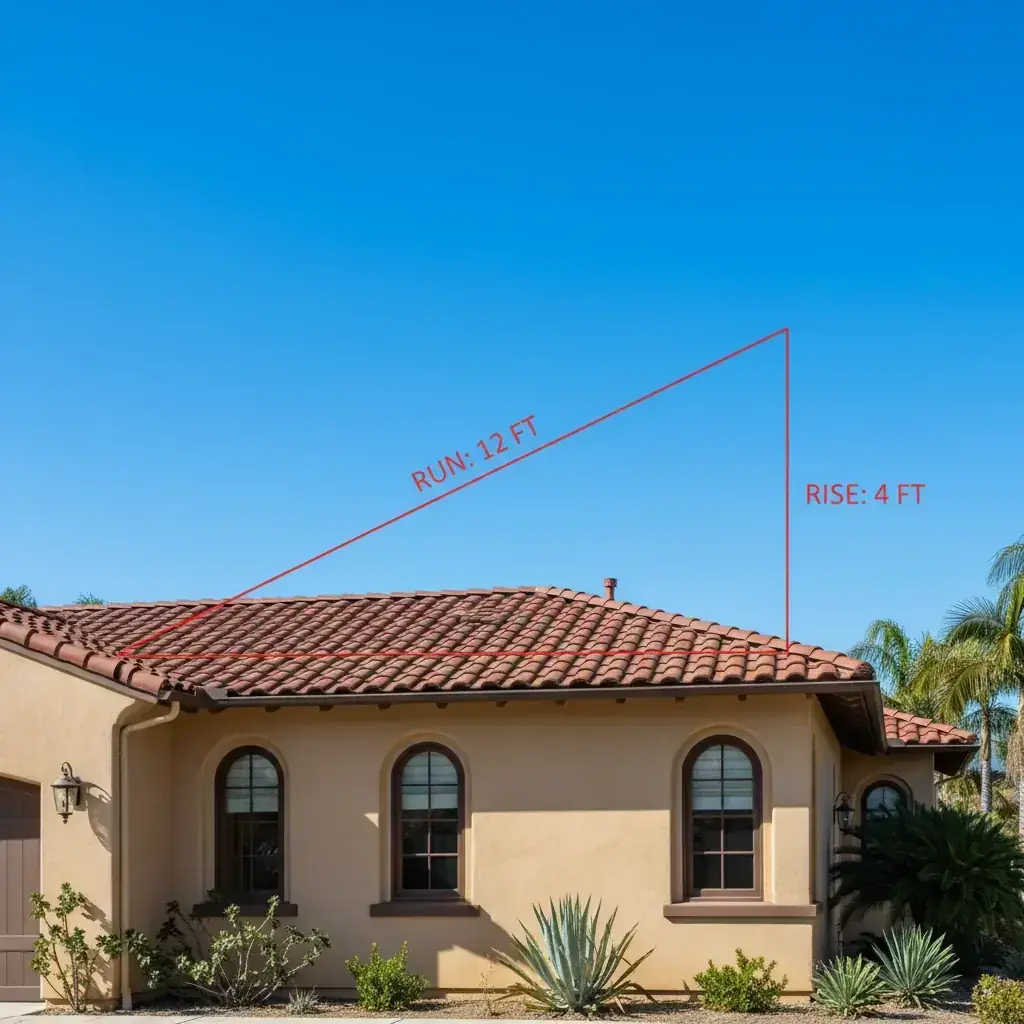
What actually defines flat vs pitched
A “flat” roof is not level. Ask the AHJ and the membrane maker which slope they treat as low-slope versus steep-slope. That split drives the waterproofing: membranes (TPO, PVC, EPDM, modified bitumen, built-up) on low-slope; shingles, tile, or panels on steep-slope.
| Term | Slope | Typical materials |
|---|---|---|
| Flat / low-slope | about 0.25:12 to under 2:12 | TPO, PVC, EPDM, modified bitumen |
| Conventional pitched | 4:12 to 9:12 | Asphalt shingles, concrete or clay tile, metal |
| Steep pitched | 9:12 and above | Metal, slate, specialty shingles |
A zero-slope deck ponds. Even a “flat” roof needs drainage slope, commonly 1/4 inch per foot toward drains or scuppers. The NRCA treats under 2:12 as low-slope and expects that drainage to be built in.
How to measure pitch, and why the number matters at permit time: roof pitch explained.
Cost: do not pick a shape from a square-foot rumor
Upfront membrane work is often cheaper than a tile re-roof on the same footprint. Tile and standing-seam metal usually win on years of service if you keep the house long enough. Those are directions, not invoices. Access, layers already on the deck, parapets, tile salvage, Title 24 cool-roof rules if the CEC path for this address says so, and HOA product lists all move the number more than the word “flat” or “pitched.”
Ask the C-39 for a written scope on this house: tear-off vs overlay (ask the AHJ whether overlay is even a path), insulation or tapered boards, flashing at walls, and walk pads around equipment. Compare those scopes. Do not compare a blog table. For how bids are usually built, see how much roofing costs in San Diego and flat roof repair cost.
Lifespan in this county
Coastal salt and inland UV both shorten life. They do not hit every product the same way.
Pitched roofs
- Architectural asphalt: often shorter within a few miles of the ocean, where salt and wind chew granules faster than in Poway or El Cajon.
- Concrete tile: the tile can outlast the underlayment. Plan on the felt or membrane under the tile as the weak link, not the clay or concrete itself.
- Clay tile: same underlayment caveat. Common on Spanish-style stock in Mission Hills, Old Town, and La Jolla.
- Metal: watch fastener and flashing corrosion on coastal lots, and galvanic pairs where dissimilar metals meet.
Flat roofs
- TPO: common on new ADUs and commercial low-slope. South-facing, high-UV planes age faster than shaded inland decks.
- Modified bitumen: asphalt-based. San Diego sun oxidizes it. Shorter service window than a well-kept TPO if both were installed correctly.
- EPDM: strong UV story among membranes. Black sheets run hot.
The county-wide material table lives in how long a roof lasts in San Diego. On flat roofs here, foot traffic often kills the membrane before rainfall does. HVAC techs on a condenser with no walk pads will punch a TPO sheet. Spec pads at re-roof.
Drainage and ponding
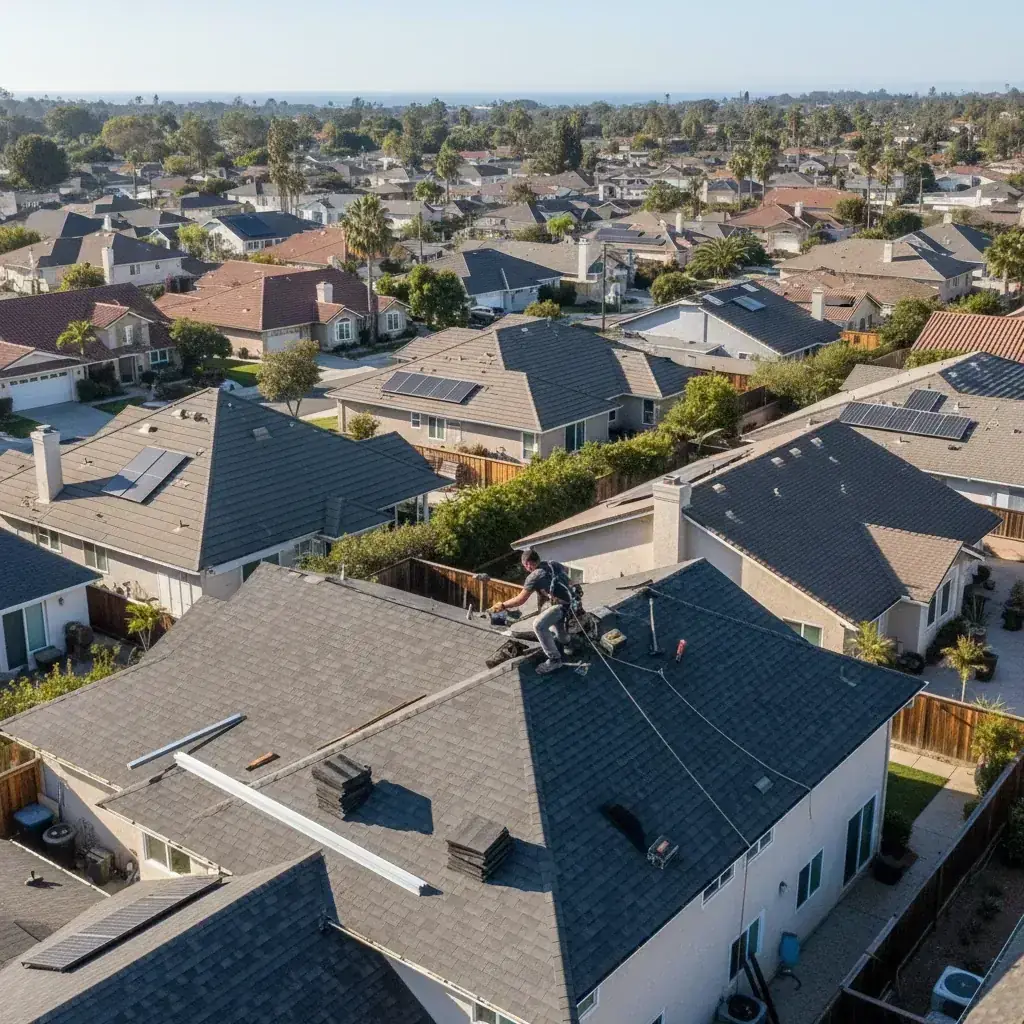
Most of the rain lands in a few winter storms. A clogged scupper after one Jacaranda drop can leave standing water for days. Many manufacturer warranties treat water that sits 48 hours after rain as ponding. Ponding is a slope and drain problem.
Typical San Diego causes:
- Framing sag. Older low-slope joists settle. A new membrane on a dish still ponds.
- Clogged scuppers and interior drains. Palm fronds, bougainvillea, and jacaranda litter.
- Missing taper. Insulation should pitch the membrane to the drains. A flat install creates dead zones.
A new sheet over a dish is the expensive way to learn that. Tapered insulation and open drains fix more leaks than a color swap. Detail: flat roof ponding water.
Materials that actually show up here
Pitched: architectural shingles (Class A listings exist as products), concrete tile in inland tracts (Poway, Rancho Bernardo, Carmel Valley), clay on older Spanish coastal stock, standing-seam on ADUs and windy hilltops, synthetics where the AHJ or the carrier asks for a listed fire class.
Low-slope: TPO when a cool-roof path applies (see cool roof and Title 24; confirm CEC climate zone, do not treat the energy code as a default), PVC where chemical resistance matters, EPDM, modified bitumen, and leftover BUR gravel systems on older commercial decks. New residential low-slope is usually TPO. The main house may still be tile or shingle.
Which shape fits which San Diego house
| Use case | Shape that usually fits | Why |
|---|---|---|
| New modern (Encinitas, Solana Beach, North Park) | Low-slope TPO | Matches the architecture; deck or solar is simpler |
| 1920s-1950s bungalow (South Park, Kensington, Hillcrest) | Pitched | Framing and street look already assume a slope |
| Spanish (La Jolla, Mission Hills, Point Loma) | Pitched tile | Style-correct; underlayment is the maintenance item |
| ADU or garage conversion | Low-slope | Lower eave, smaller footprint |
| Second-story addition | Match the existing roof | Drainage continuity at the tie-in |
| Rooftop deck or flush solar | Low-slope | Access and racking |
| Hilltop Santa Ana exposure | Pitched hip | Uplift. See hip vs gable |
| Within about a mile of the ocean | Often pitched, or low-slope with coastal metal spec | Salt eats exposed flashings and drains |
| Multi-tenant or retail | Low-slope | Equipment curbs, parapets, hidden from the street |
Ranch houses with a pitched body and a flat porch or carport are common. The leak is usually the transition flashing, not “flat vs pitched” as a philosophy.
HOA and look
Carmel Valley, 4S Ranch, and many Pardee-era tracts lock concrete tile and a fixed roofline. North Park, City Heights, and much of East County have no HOA. If you have one, get written architectural approval before you sign a roofing contract. Typical packets want a material sample, a color chip, the roofer’s CSLB number (license check), and a sketch if the silhouette changes. Example of a strict packet: Carmel Valley HOA roof rules.
A flat roof on a 2020s modern box is what buyers expect. The same silhouette on a 1950s Clairemont ranch can read as a cheap conversion. Match the house.
Insurance
California homeowners underwriting has tightened after the wildfire years. Listed Class A pitched assemblies (tile, metal, fire-rated asphalt) are easier for many admitted carriers to keep. That is underwriting on your declarations page, not a countywide Class A law. Low-slope membranes, especially older ones, can draw extra questions, ACV roof endorsements, or non-renewal if the sheet is past its rated life.
Call your agent before you convert a pitched roof to low-slope, or before you add a large flat section. Get the roof-settlement language in writing. If you already have a non-renewal letter, roof age and insurance non-renewal.
FAQ
Is a flat roof actually flat?
No. Even membrane roofs need slope toward drains or scuppers. Drainage slope is a building-code and manufacturer question. Read the current CBC/IBC low-slope language the AHJ uses. We will not restate pitch ratios here. A true zero-degree deck ponds.
Do flat roofs leak more?
They hide water longer. Ponding and bad wall or porch transitions drive most of the difference, not the brand name on the roll. A TPO job with taper and clean scuppers can stay dry. A pitched tile roof with failed underlayment will not.
Which is cheaper to install?
Often the membrane, on a simple rectangle, before you count parapets, crickets, and equipment. Tile and metal usually cost more to put on and last longer if the underlayment is maintained. Get two written scopes on the same house. We do not quote from this page.
Which adds more resale value?
The one that matches the architecture. Flat on a new Encinitas box can help. Flat on a 1950s ranch that still reads as a tract house can hurt.
Can I convert flat to pitched?
Yes as a structural project: new framing or trusses, engineering, city permit, and a full new covering. It is most often paired with a second story. A standalone conversion is a different job than a re-roof. Price it as structure plus roofing, not as a membrane swap.
Does the HOA have to approve the type?
If you have CC&Rs, almost always yes before work. Planned communities (Carmel Valley, 4S Ranch, Rancho Penasquitos, Eastlake) want samples and a C-39 number. Build that calendar in before you lock a start date.
Get connected with a licensed independent San Diego roofer
The shape call is a structure and HOA call. Picking from a photo, then learning at permit that the joists will not carry tile, is the expensive order.
We connect you with a C-39 who actually works your system: TPO, tile, or a hybrid ranch with both. Confirm the license on the CSLB site. Confirm general liability and workers’ comp with the contractor. We do not hold those policies.
Call (760) 750-5557 or request an estimate. Related services: flat roof TPO and roof replacement.