TL;DR
- A C-39 roofer can replace the roof. Detaching and resetting the array is solar work. In California that is typically a C-46 solar contractor unless the same firm holds both classifications.
- Original installer, still in business, usually knows the racking and the inverter. A third-party crew reverse-engineers an orphaned 2012-2018 array.
- Price belongs on written quotes, not a blog. Ask for a complete detach-and-reset scope, storage, new flashing, hardware reuse rules, and who talks to SDG&E.
- A like-for-like reset is not the same as expanding the system. Ask in writing whether the work affects your CPUC net-billing / NEM status.
Top Pro Roofing SD refers licensed roofers. We do not pull panels. Call (760) 750-5557.
Carmel Valley, Scripps Ranch, Carlsbad, Encinitas, and Poway loaded a lot of arrays onto 10-15 year roofs during NEM 1.0 and NEM 2.0. Those roofs are now in the replacement window. The why people are getting rid of solar piece is a different decision. This page is the reroof choreography.
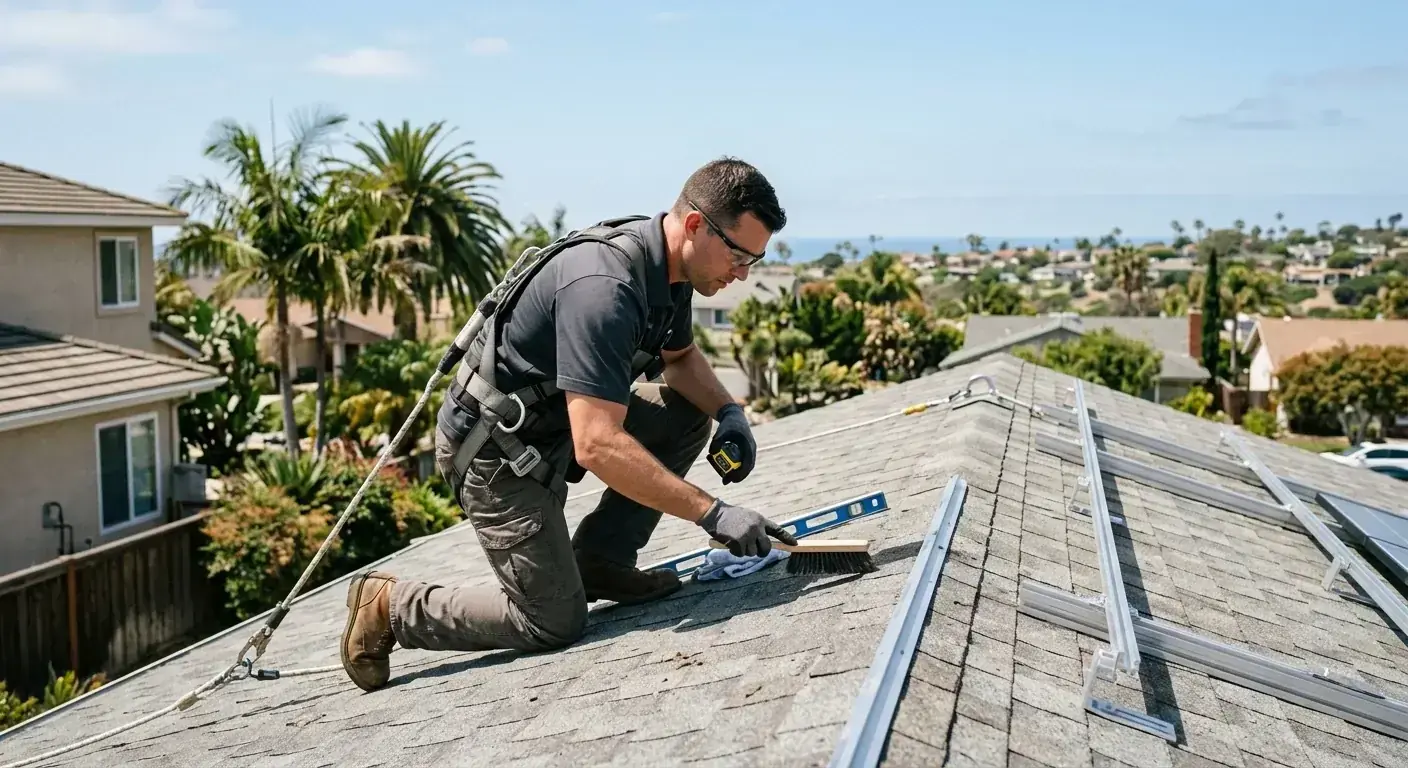
Why the solar line shows up on a roof bid
The salesperson who sold a 25-year array did not always ask how much life was left in the underlayment. Tile in Encinitas and asphalt in Santee both hit that mismatch.
Two crews, one calendar. The roofing crew cannot legally treat the array as “just stuff on the roof” if they lack the solar classification. You want both licenses checked on the CSLB license search before anyone unclips a module.
If the system is leased or under a PPA, the system owner usually has to approve the detach. Do not schedule demo from the roof quote alone.
Original installer vs a third-party solar crew
Original installer, still operating. They have the as-built, the racking brand, and the inverter login path. Quotes tend to be cleaner because they are not guessing hardware. Many 2010-2018 regional names are gone. Sungevity and NRG Home Solar are the examples homeowners still recognize. If your paperwork points at a dead company, you are in third-party territory.
Still in business, no service plan. They may take the job at a retail rate, or they may decline an array they no longer support. Get that answer in writing.
Third-party O&M. They inspect rails, identify string vs microinverter vs optimizer layouts, document the layout for reset, and handle disconnect. A large share of the bid is identification and commissioning, not only carrying modules down a ladder. Enphase, SolarEdge, and similar makers keep service-partner lists. NABCEP’s directory is another filter, not a substitute for a CSLB check.
Roofer-subbed solar. Coordination is the value: one window, solar off the morning of demo, back when the new roof is closed. Ask who the sub is, confirm C-46, and talk to that firm before you sign the roof contract. Do not treat a bundled line as cheaper until both scopes are itemized.
We will not invent per-panel rates. Compare mobilization, panel count, roof type (tile lift vs asphalt lag-bolt holes), hardware refresh, and permit language. A cheap quote that reuses 15-year lag bolts and skips flashing is not the same job.
What a complete detach-and-reset includes
Treat “detach and reset” as a sequence, not a slogan.
- Shutdown and utility notice. The array comes off the grid before anyone walks the modules. SDG&E communication is the solar contractor’s job unless the contract says otherwise.
- Panel removal. Unclamp, disconnect, carry. Glass laminates crack if torqued. Confirm the crew’s insurance covers module damage.
- Rail and attachments. Tile: lift tile, pull mounts. Asphalt: lags out, holes sealed for the tear-off. Photograph the layout.
- Conduit. Roof-surface conduit often has to move so the C-39 can work. Attic runs usually stay.
- Storage. Flat, off dirt, protected. Driveway tarp vs garage is a theft and weather call.
- Reset. New flashing integrated with the new roof, mounts (new or inspected reuse), rails, modules, electrical reconnect.
- Monitoring. Enphase Enlighten, SolarEdge, Tigo, or whatever you actually have has to report again. A dark app a week later is a missed optimizer, not “the system needs to settle.”
- Permit if the electrical changes. Like-for-like reset is often treated differently from a hardware swap. The city, not a blog, decides.
| Scope | What you are buying | When it fits |
|---|---|---|
| Bare remove and reset | Lift, store, put back, basic reconnect | Newer array, hardware in spec, simple plane |
| Standard reset | New flashing and fasteners, full recommission | Most 8-15 year San Diego arrays |
| Full service | Hardware audit, conduit relocate, permit path | Dead installer, mixed hardware, any electrical change |
What grows the invoice after you sign
Broken modules. Replacement is a product-plus-labor line. Confirm who pays before work starts.
Hardware you should not reuse. Sun-baked lags, clamps, and flashing on a fresh roof are a leak waiting for November. Ask for a reuse vs replace rule in the quote.
Conduit relocate. Older installs ran pipe across the field. The roofer may need it off the deck.
Monitoring lockouts. Some platforms need a firmware push or a maker service step. Ask before the array comes down.
NEM / net-billing. California’s export rules changed in 2023. A like-for-like detach-and-reset is not automatically a new interconnection. Adding panels, changing inverter capacity, or other substantial modifications can be. Get the solar contractor’s written position and, if needed, confirm with the utility. See the CPUC solar billing page.
Roof first if the array is not up yet
If you are still shopping solar on a 10-plus-year roof, replace the roof first. That is the prepare the roof for solar sequence. You avoid a future detach on a brand-new array. Locking a future reset rate into a solar contract is worth asking for. It is not something we can price here.
One project window
Asphalt replacement is often a few days. Tile runs longer. Production is zero while modules sit in the driveway. Split mobilizations (roof this month, solar next month) usually cost more in trip charges and lost generation, not less. Book both firms to the same window. Mid-week is easier than a Monday start.
Tile details: tile roof replacement. Repair vs replace before you touch the array: repair versus replace. Mount damage under existing panels: do solar panels damage the roof.
How to check the reset
- Production in the monitoring app after reset. Every module or optimizer online. Ask the solar firm what window they will put in writing.
- Every penetration has flashing tied into the new roof. No raw lags. No caulk-only “seals.”
- Layout vs the photo you took at removal, especially on string inverters.
- Inspection card if a permit was pulled. File it.
- Attic check after the first real rain, usually late fall.
FAQ
Can the roofer do the solar work?
Only with the right CSLB classification. A C-39 without C-46 is not a solar crew. Ask, then verify.
Does homeowners insurance cover a dropped panel during a planned reroof?
Usually that is contractor liability, not a weather claim. Read the solar firm’s policy, not your HO-3 brochure.
How long is the array offline?
Match it to the roof schedule the C-39 actually quoted: often a few days on asphalt, longer on tile. Plan on a higher SDG&E bill for that cycle.
Do manufacturer production warranties survive a reset?
Module production warranties often follow the product if the reset is proper. Original installer workmanship usually does not. The reset contractor should warrant their own work.
Is it cheaper to scrap the array and buy new?
Almost never on a working post-2010 array. New install is a full interconnection and equipment package. Reset is a service job. Pre-2010 or visibly failed modules are the exception. Get both numbers in writing.
No paperwork, dead installer.
A competent third party can identify brands from labels in a site visit. Expect an assessment line for that documentation.
When to call us
We connect you with a vetted C-39 for the roof replacement (tile or asphalt) and, when the project needs it, an introduction to a solar partner for the detach quote. Two contracts, one calendar. Call (760) 750-5557.