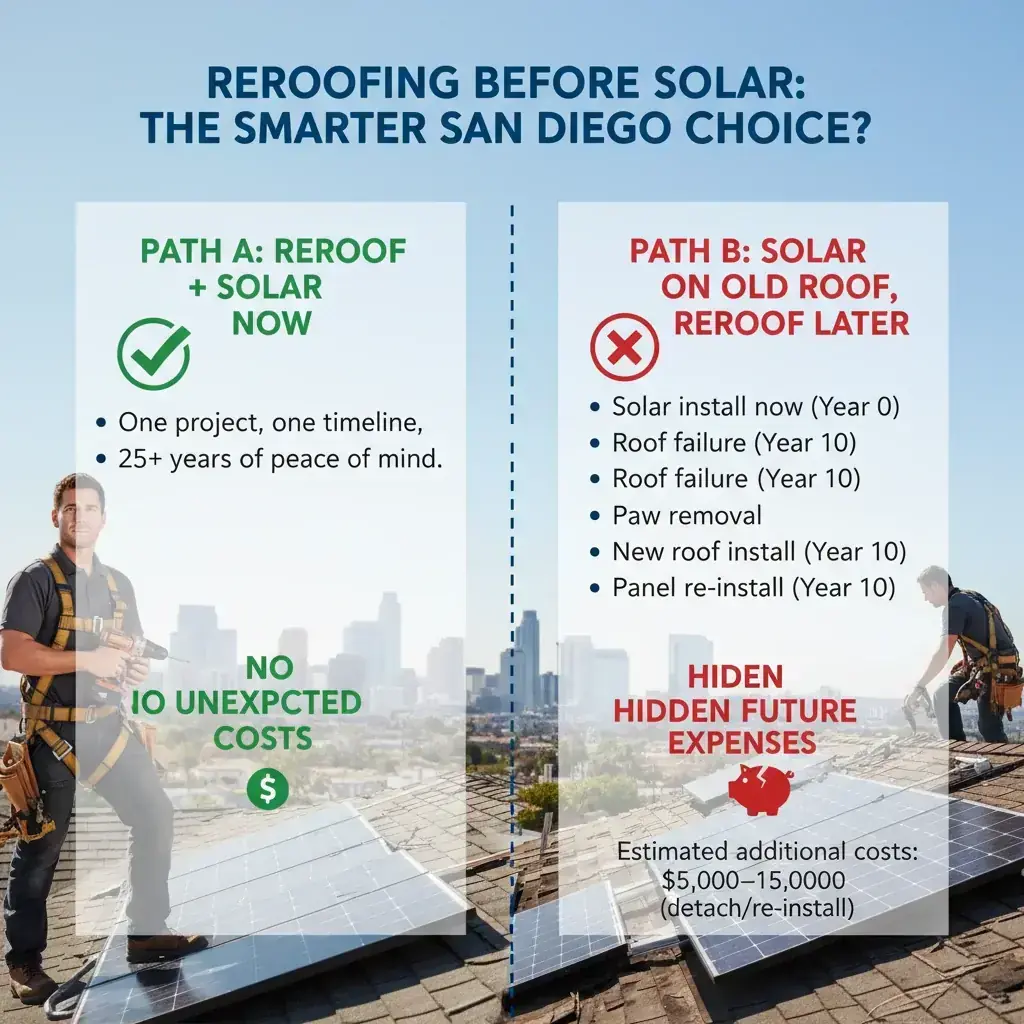
If the roof will need a tear-off during the life of the array, replace the roof first. Detach-and-reset later is a second solar mobilization, new penetrations, and a dark monitoring app while modules sit in the driveway. That is the whole decision.
Top Pro Roofing SD refers licensed independent C-39 roofers. We do not install solar, pull modules, or set contractor prices. Call (760) 750-5557. The homeowner contracts with the matched roofer. Solar work in California is typically a C-46 classification. Confirm both licenses when two trades share one calendar.
The why people remove solar page is a different choice. Detach-and-reset during a reroof is the choreography after panels already exist. This page is the sequence before the first mount goes in.
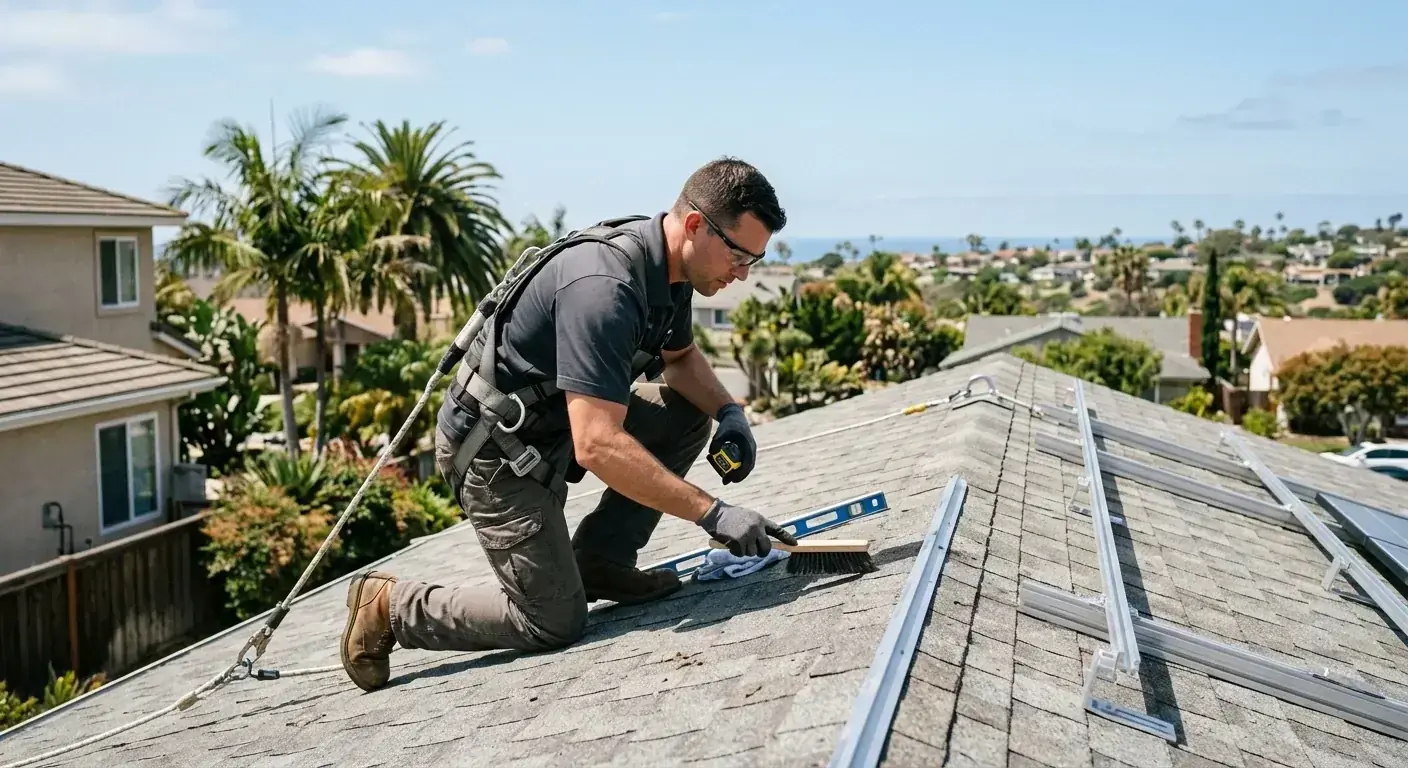
Remaining roof life versus array life
Residential modules are commonly sold with 25-year production warranties. Tile on Encinitas or La Mesa can outlast that. The felt or underlayment under tile often does not. Architectural shingles in Santee, Mira Mesa, and Chula Vista often hit the replacement window first.
A C-39 inspection should answer:
- Covering type and approximate remaining life of the weather surface
- Underlayment condition where it can be seen (eave, lifted tile, prior repairs)
- Soft deck, rusted fasteners, open valleys, failed pipe boots
- Whether flashings at walls, chimneys, and vents will survive another two decades
- Whether the plane that will carry the array is the plane that actually leaks
Asphalt that is already curling, granule-bald, or patched at every vent is a poor host. Tile that looks fine from the curb can still have brittle underlayment. Standing-seam metal with sound seams is usually the easiest substrate because clamps can sit on the seam. See what deteriorates asphalt shingles in San Diego and do solar panels damage the roof.
Ask the solar company, in writing, what happens if the roof needs replacement during the array warranty. A future reset rate locked into the solar contract is a question. It is not a number this page can invent.
Covering type changes the mount, not the sequence
Architectural asphalt. L-feet lag into rafters. Flashing kits tuck under the upper course. Sealant-only lags are the leak that shows up in year 10. If the shingles are near the end, a new covering first means the solar crew flashes into a new roof, not around worn tabs.
Clay or concrete tile. Typical methods lift tile, set a replacement flashing plate, then relay. Drilling the tile and caulking is a different (worse) detail. Tile breakage is expected during any array work. Matching discontinued clay is a salvage problem on Mission Hills and older North County streets. If underlayment is the real failure, the honest job may be lift-and-relay before anyone stocks rails.
Standing-seam metal. Non-penetrating seam clamps (listed hardware for that panel profile) keep the field intact. Confirm the clamp is listed for that panel profile. Exposed-fastener metal is not the same product.
Low-slope and flat. Ballasted or adhered racks show up on some modern houses and ADUs. Weight, parapet height, and drainage all belong on the structural and roofing review. See flat roofing.
The covering does not change the sequence rule: a short remaining roof life still means reroof first.
Structure, wind, and every penetration
Panels and rails add dead load. Wind uplift on coastal and East County roofs is often the larger engineering question. A solar installer should produce a layout and attachment plan. Older ranch framing, skipped rafters, and low-pitch additions in Julian or Palomar may need an engineer before either trade starts. Mountain snow and fire rules: mountain roof considerations.
Every lag or post that pierces the deck is a water path. The flashing has to integrate with the covering the way a pipe boot does. Caulk is not flashing. After a roof replacement, the solar crew should use new flashing tied into the new underlayment, not reused 10-year lags.
Photograph the roof plane before rails go on. You will want that photo if a later reroof has to reset the array.
Permits, HOAs, and who talks to the utility
Solar electrical and structural permits are separate from a reroof permit. The solar contractor usually files the array. The C-39 files the roof. Two counters, two inspection cards. Confirm which city or unincorporated county desk has the address.
California’s Solar Rights Act lives at Civil Code section 714. Read the current live text for how an HOA may treat a system. Associations can still write reasonable placement and appearance rules. This page does not restate those holdings. Submit early. Carmel Valley, Scripps Ranch, and similar planned communities will have a design packet. See Carmel Valley HOA roof requirements.
Interconnection is SDG&E’s process, not the roofer’s. A like-for-like future reset is not automatically a new interconnection. Adding capacity later can be. The solar contractor should state that in writing. CPUC billing rules: CPUC solar billing.
California Energy Commission solar and Title 24 context: energy.ca.gov. New-home solar-ready rules do not tell you what to do with a 1998 shingle roof in Clairemont. Read the live CEC text for this occupancy. Do not treat Title 24 as a reroof default.
What the pre-solar roof inspection should produce
A roof inspection before the solar contract is signed should be a written record, not a driveway glance.
Ask for:
- Roof type, approximate age, and remaining-life opinion with the limits of what was visible
- Photos of eaves, valleys, penetrations, and the proposed array plane
- Soft-deck or prior leak notes
- Whether a reroof or relay should precede mounts
- Whether the matched C-39 and the C-46 can share a work window
If two solar quotes assume the roof is “fine” and the roofer disagrees, the roofer’s photos are the document to send back. Do not let a sales timeline skip the covering.
How to sequence the two contracts
- Roof inspection with a licensed C-39. CSLB check: license lookup.
- If remaining life is shorter than the array, bid roof replacement first. Hold solar until the new covering is closed and inspected.
- If remaining life is honest, put flashing and attachment rules in the solar scope. Name who warrants leaks at mounts.
- Book both firms to one calendar if both jobs are happening. Split mobilizations usually mean extra trips and more days offline.
Related: repair versus replace, asphalt shingle roofing, metal roofing.
When to call
Call when you need a licensed roofer to inspect remaining life, covering, and flashings before solar mounts go in. Top Pro Roofing SD matches San Diego County homeowners with independent C-39 professionals. Call (760) 750-5557.