Replacing an asphalt shingle roof in San Diego is a tear-off, underlayment, flashing, and permit job, not a weekend patch. This guide covers when replacement beats repair, how 3-tab, architectural, and designer products differ on a bid, tear-off versus overlay, coast versus inland details, and what to check before final payment. We do not invent installed totals, per-square-foot bands, permit fees, or a two-day guarantee.
Top Pro Roofing SD is a referral marketplace. We connect homeowners with CSLB-licensed roofers. We do not reroof houses or publish a 2026 rate card. Call (760) 750-5557. For aging patterns, see what deteriorates asphalt shingles fastest in San Diego.
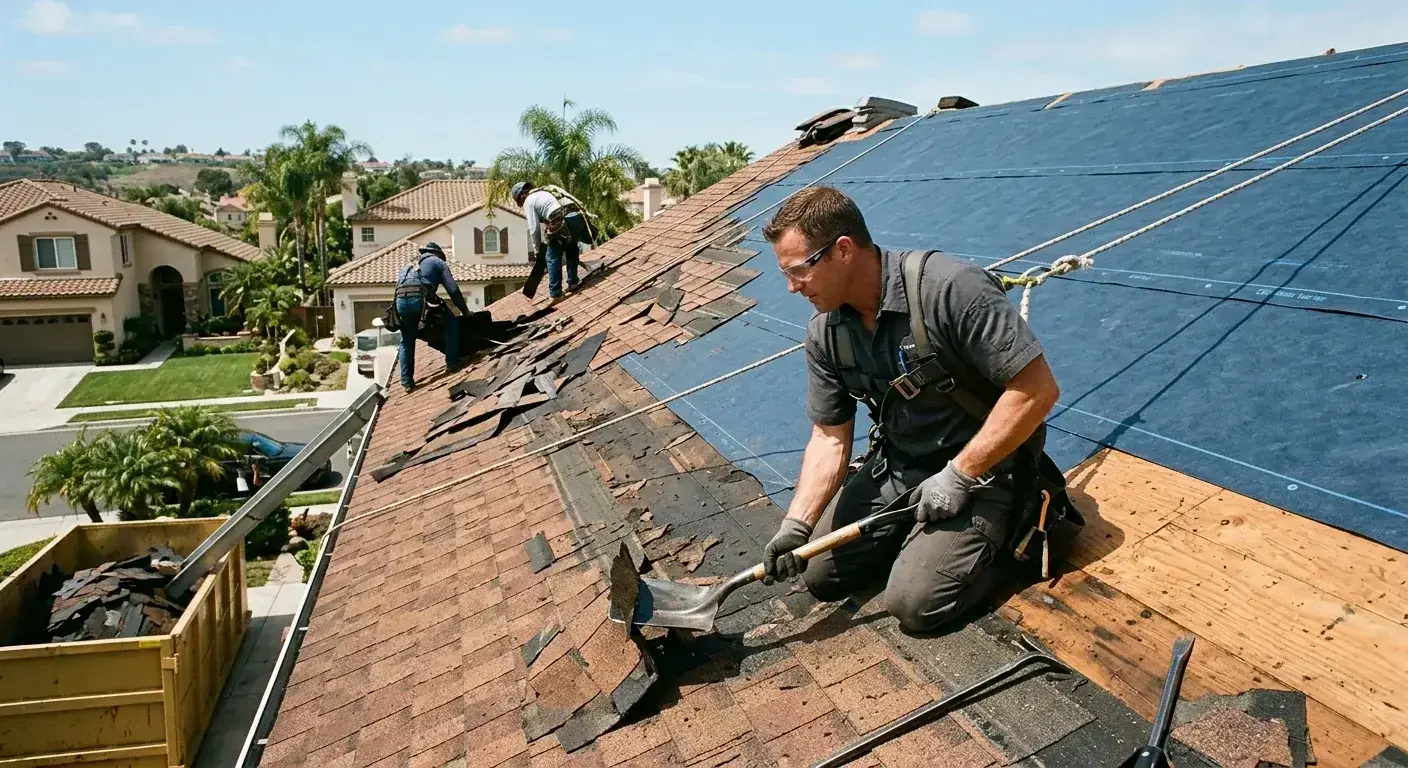
When a shingle roof is actually due for replacement
Manufacturer terms vary by product. Three-tab lines are usually shorter-lived than architectural laminates in this sun. Once the whole mat is fatiguing, isolated repairs stop being the honest job. Side-by-side on type: asphalt shingle vs. architectural shingles in San Diego.
Clear replacement signals:
- Curling or buckling across more than one area
- Granules collecting in gutters after rain, with bare asphalt showing
- Missing shingles on more than one section
- Interior leaks at walls or ceilings, not only at one flashing
- Dark algae streaking plus other deterioration (streaks alone are often cosmetic)
Isolated wind loss or one failed flashing is a repair. Widespread granule loss, curling on several slopes, or a roof with a leak history after long service is a replacement conversation. A C-39 inspection is the only way to call it for this house.
How to read a San Diego shingle reroof bid (without a fake total)
We will not print a typical-home total or a 3-tab vs architectural price table. Those numbers change with squares, pitch, stories, valleys, access, deck repairs, and city versus county fees.
Compare bids on the same scope:
| Line | Why it moves the number |
|---|---|
| Product | 3-tab, architectural (laminate), or luxury/designer, named by brand and line |
| Roof size in squares | Heated square footage is not roof area |
| Pitch and stories | Steeper and higher mean more labor and safety time |
| Tear-off vs overlay | Overlay skips deck inspection and adds weight |
| Underlayment and flashing | Felt vs synthetic; coastal metals vs inland |
| Decking | Soft or rotten sheets are a change order if not already in the scope |
| Permit and disposal | The contractor should name the AHJ and who pulls the permit |
| Ventilation | Ridge and soffit work inland is not optional decoration |
Labor is usually the large share on a shingle job here, but we will not invent a percentage. Coastal access and steep pitches push bids up. Broader material context: new roof cost San Diego 2026.
Coastal vs. inland: how your zip code changes the job
San Diego County is not one climate. The quote should say which details belong on this lot.
Near the water in Coronado, Point Loma, La Jolla, Encinitas, or Imperial Beach, salt is the quiet problem. Standard galvanized nails, flashing, drip edge, and vent boots can rust while the shingles still look serviceable. Ask for corrosion-resistant fasteners and metals on a coastal spec. Pick a shingle with a documented algae-resistant rating if marine-layer fog keeps the roof damp.
Inland in El Cajon, Santee, Lakeside, Poway, or Escondido, heat is the driver. Attic heat cooks shingles from below and speeds granule loss. Lighter, more reflective architectural colors run cooler than dark three-tab. A ridge-and-soffit path that actually vents matters more inland than on the coast. If the reroof quote never mentions ventilation inland, that is a flag. See roof ventilation and attic heat in San Diego.
Tear-off vs. overlay: which one’s right for your home
| Tear-off | Overlay | |
|---|---|---|
| Deck inspection | Full: rot and soft spots can be seen | None: hidden damage stays hidden |
| Weight added | None from a second shingle layer | Adds a second layer on the framing |
| San Diego code | Always the clean path | Ask the AHJ whether overlay is even allowed on this roof |
| New roof lifespan | Can follow the manufacturer system if installed as specified | Often shorter: trapped heat between layers |
| When it can make sense | Most replacements, older roofs, any suspected deck issue | Only if the AHJ, the warranty, and a confirmed sound deck all allow it |
A tear-off is usually the better call in this county. Heat between stacked shingle layers speeds breakdown. Ask the AHJ and the matched C-39 whether overlay is allowed on this roof. Read current layer limits in the adopted code and the product warranty, not this blog. Full process: roof overlay vs. tear-off in California. We will not invent how much an overlay “saves.”
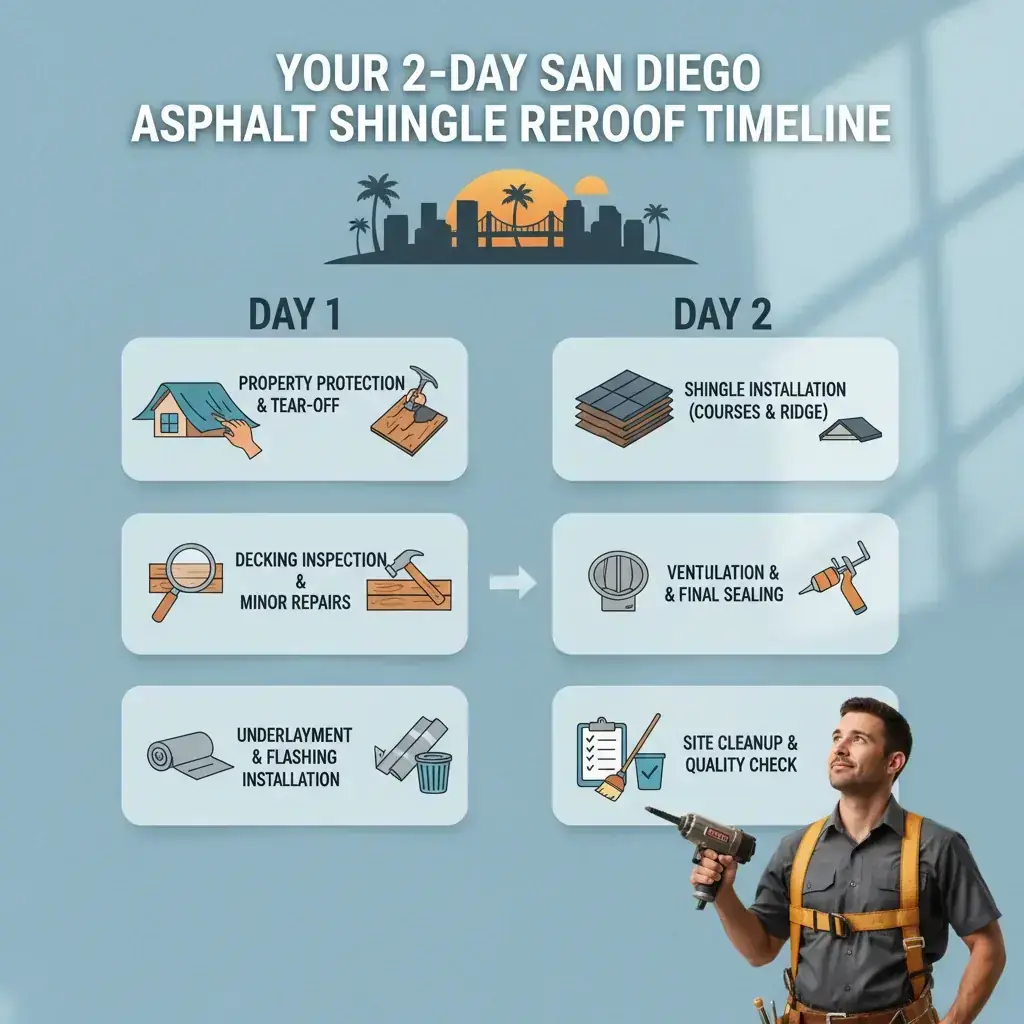
What a focused shingle reroof actually looks like
Simple one-story roofs often finish in a short calendar once the crew starts. The matched contractor’s schedule controls, not this page. Larger roofs, rain, or bad decking add days.
Preparation and tear-off. Tarps on landscaping. Old shingles, underlayment, and flashing come off. The deck is inspected. Damaged plywood is replaced as agreed in writing. New underlayment goes down. Chimney, vent, and skylight flashings are replaced or repaired as scoped. The roof should be weather-tight at the end of this phase even if field shingles are not on yet. Related: whether a 20-year-old roof is too old.
Shingles and cleanup. Field shingles from the eaves up, per manufacturer nailing and local code. Ridge cap and any scoped ridge vents. Magnetic sweep for nails. You walk the site before final payment. A city or county inspector still has to sign off when a permit was pulled.
How San Diego homeowners actually pay for a reroof
Paying cash avoids interest. Many roofers offer third-party financing. Read the total cost, not only the monthly line. A home equity line is a separate lender decision and puts the house on the line. We do not broker loans. See roof financing options in San Diego.
If a covered event such as a named storm or fire caused the failure, talk to the insurer before you pay out of pocket. See whether insurance covers roof replacement in California. Cool-roof product choices may have utility programs in some years. Ask the current SDG&E and city rules. Get the full price in writing, including permit and disposal, before work starts.
Permits, warranties, and what to inspect before final payment
Ask the building department that owns this address whether this reroof needs a permit. Do not treat a handshake as the rule, and do not copy another city’s bulletin. The C-39 should say who pulls it and give you the number if one is required. Skipping a required permit is not a discount. We will not invent the fee. County starting point: County PDS building.
Two warranty stacks: the manufacturer’s material terms, and the contractor’s workmanship terms. Get both in writing before start. “Lifetime” on architectural shingles is a marketing word with limits. Read the actual document.
Before final payment: straight courses, consistent exposure, clean flashings, empty gutters, no nails in the yard, and a passed inspection. Service page: asphalt shingle roofing. Bid-reading across materials: San Diego roof replacement cost guide.
Frequently asked questions
How much does it cost to replace an asphalt shingle roof in San Diego?
There is no honest countywide total on this page. Squares, product, pitch, access, deck, and the AHJ all move the bid. Ask for three written quotes on the same tear-off scope. We will not invent per-square-foot bands.
How long does a shingle roof replacement take in San Diego?
A simple single-family tear-off can finish in a short run of workdays. Day one is often removal, deck, underlayment, and flashing. Field shingles and cleanup follow. Rain, size, and deck repairs extend it. Ask the crew for a written schedule.
Is it better to tear off or overlay an asphalt shingle roof in San Diego?
Tear-off is almost always the better choice here. It lets the crew see the deck. It avoids trapped heat and extra weight. Ask the AHJ whether overlay is allowed on this roof. Read current layer limits in the adopted code, not this FAQ. See roof overlay vs. tear-off in California.
Do you need a permit to replace a roof in San Diego County?
Ask the building department for this address. A full covering change often needs a permit and a final inspection. The contractor should name who pulls it. Ask for the permit number before work starts.
What type of asphalt shingle is best for San Diego’s climate?
Architectural laminates are the usual recommendation for this sun, salt, and wind when the HOA allows them. They typically carry longer manufacturer terms than 3-tab. Compare the actual product data, not a blog year-count. Asphalt shingle vs. architectural.
How do I know if my asphalt shingle roof needs replacement vs. repair?
Repair: isolated missing tabs, one flashing, one known penetration leak. Replacement: widespread granule loss, curling on multiple slopes, or recurring leaks after long service. An inspection from a local C-39 is the call.
When to call us
If the shingles are wearing out or leaks keep returning, get an inspection before the next rain. Call (760) 750-5557 and we will connect you with a vetted San Diego roofer. Top Pro Roofing SD does not install the roof.